No. 006
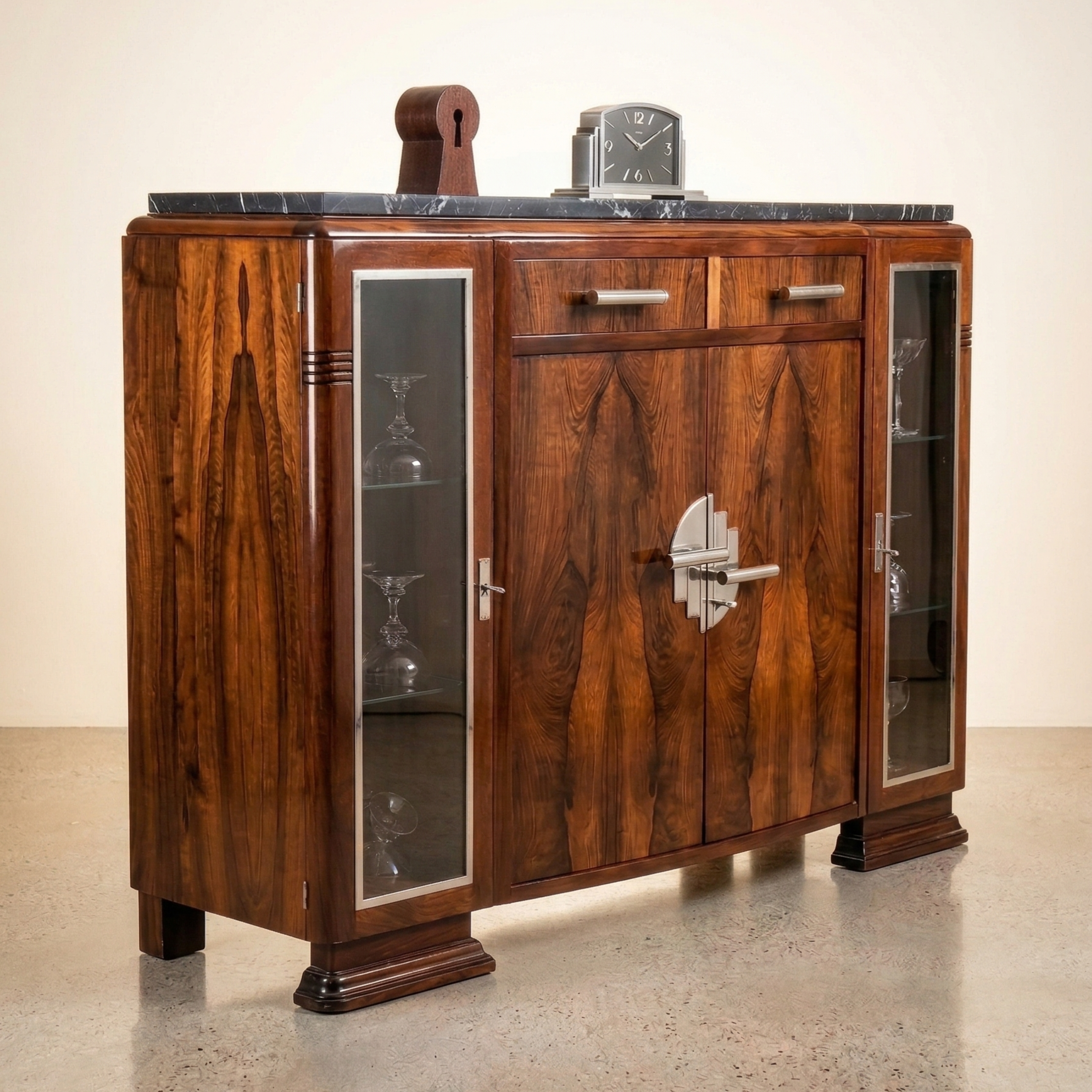
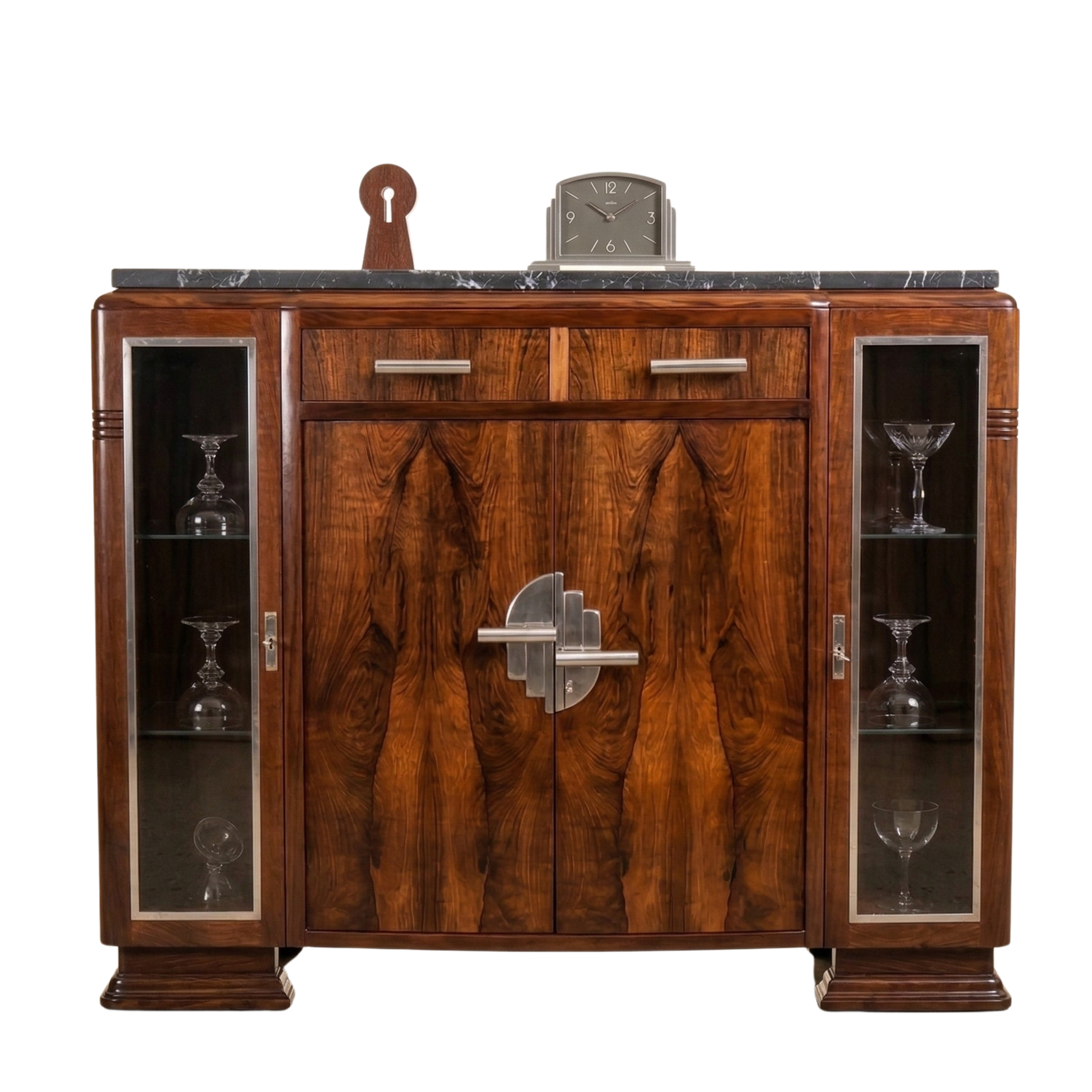
Le Croisé
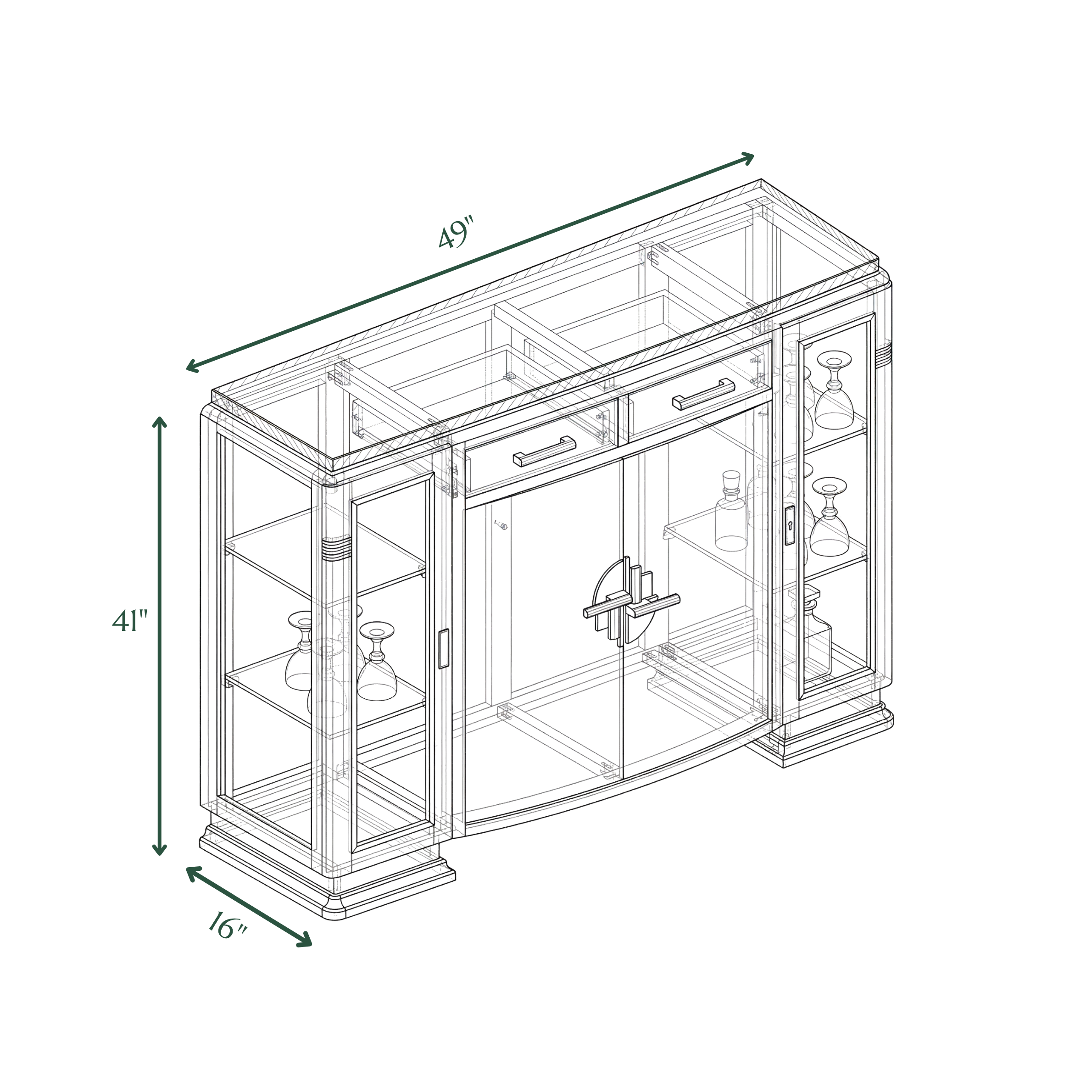
Palissandre Buffet-Vitrine
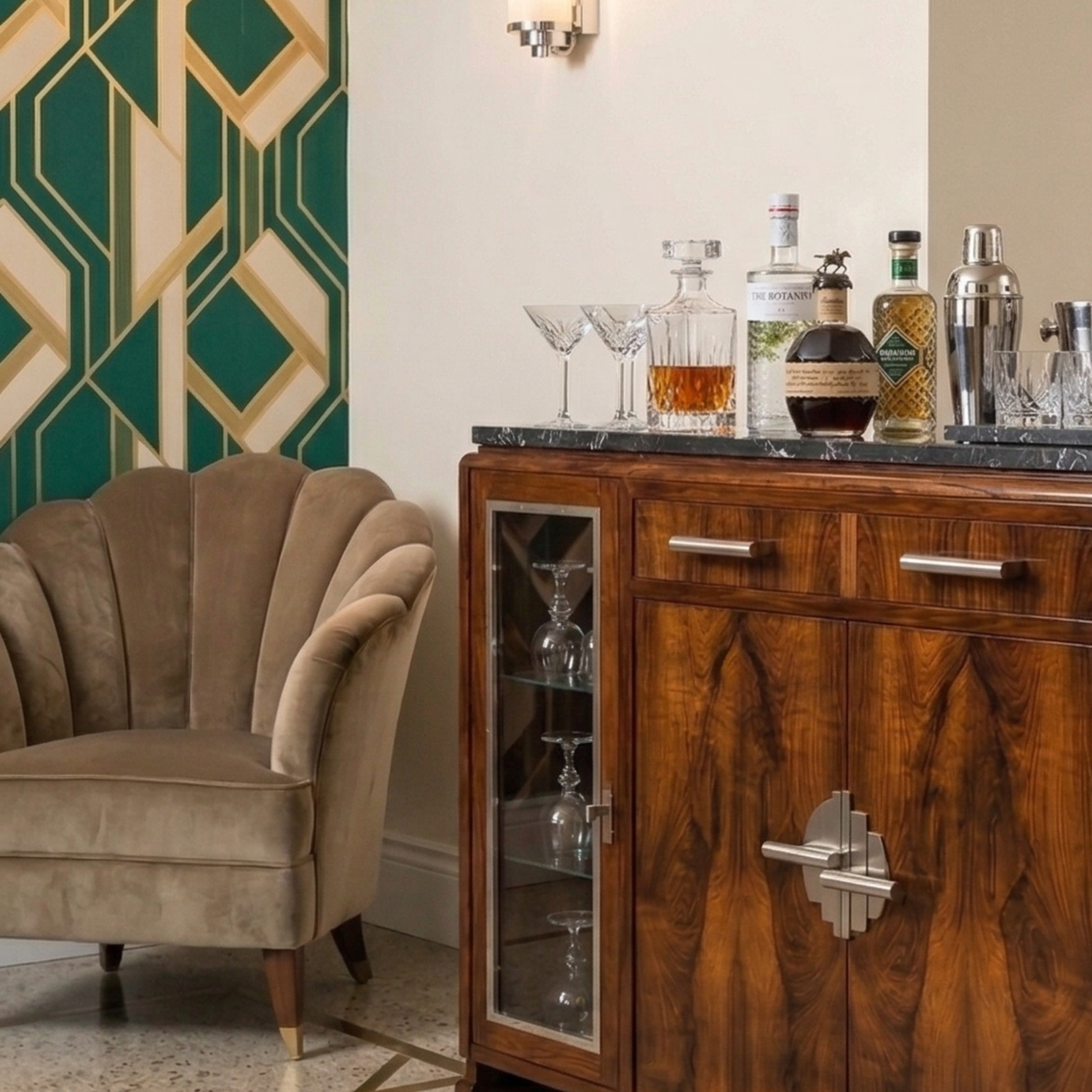
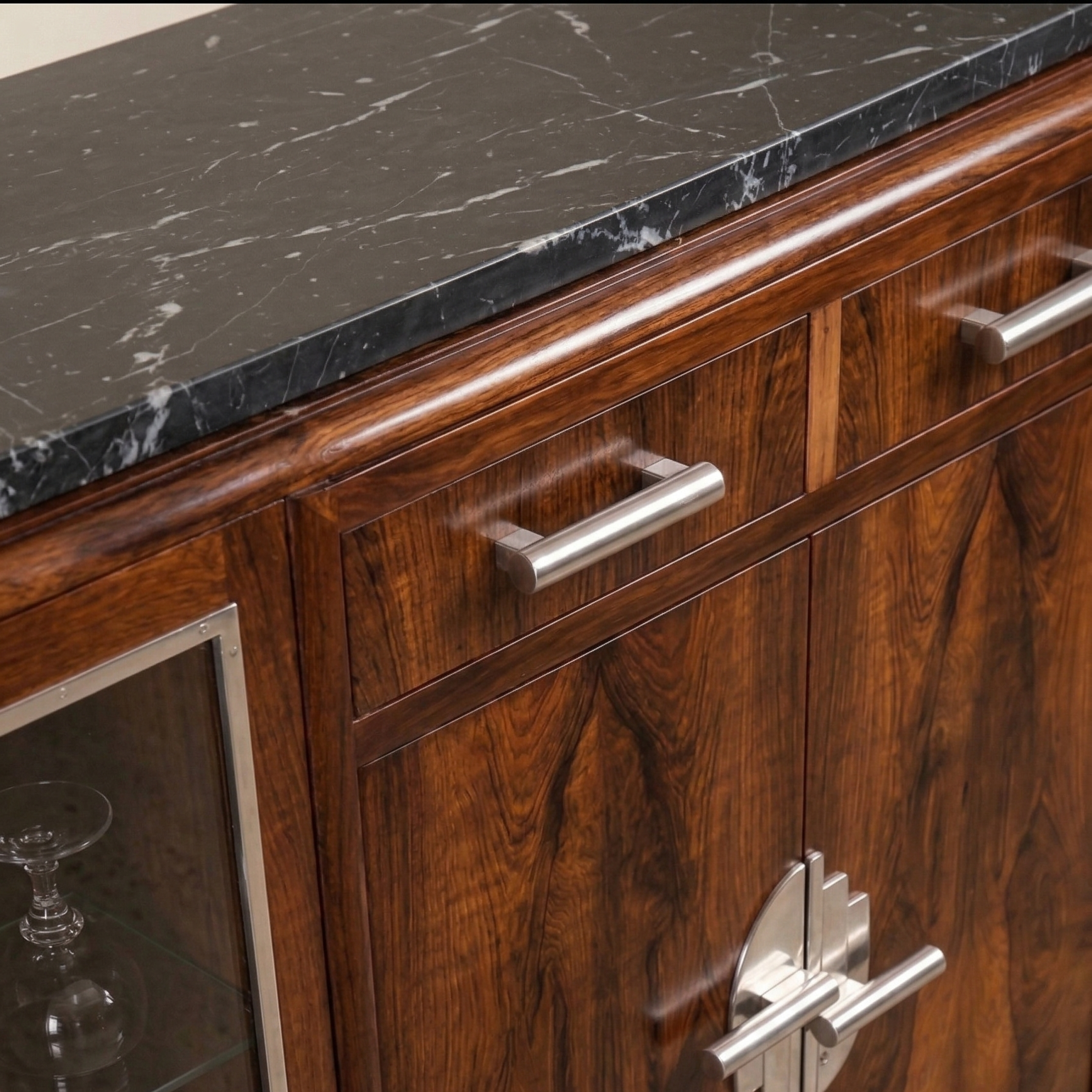
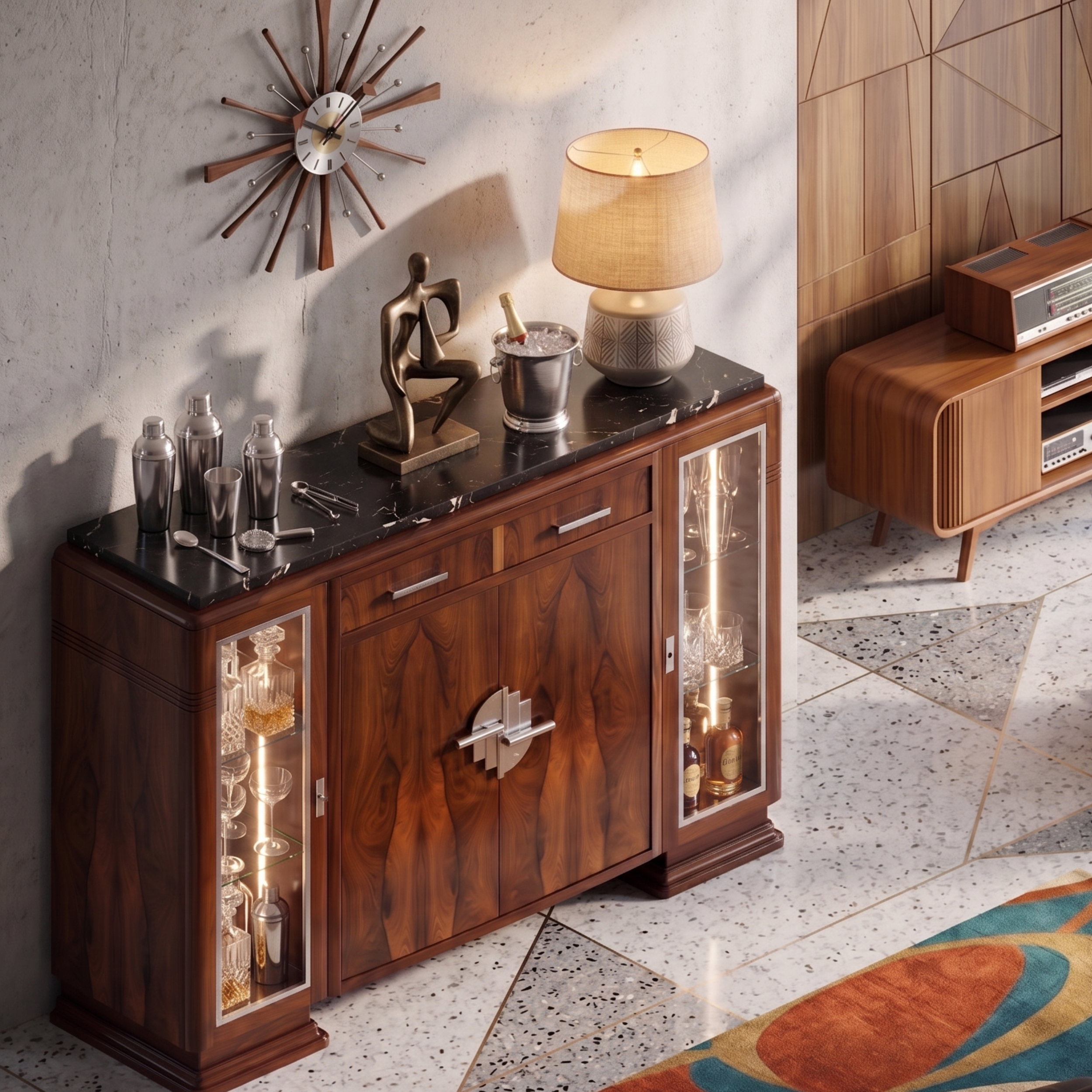
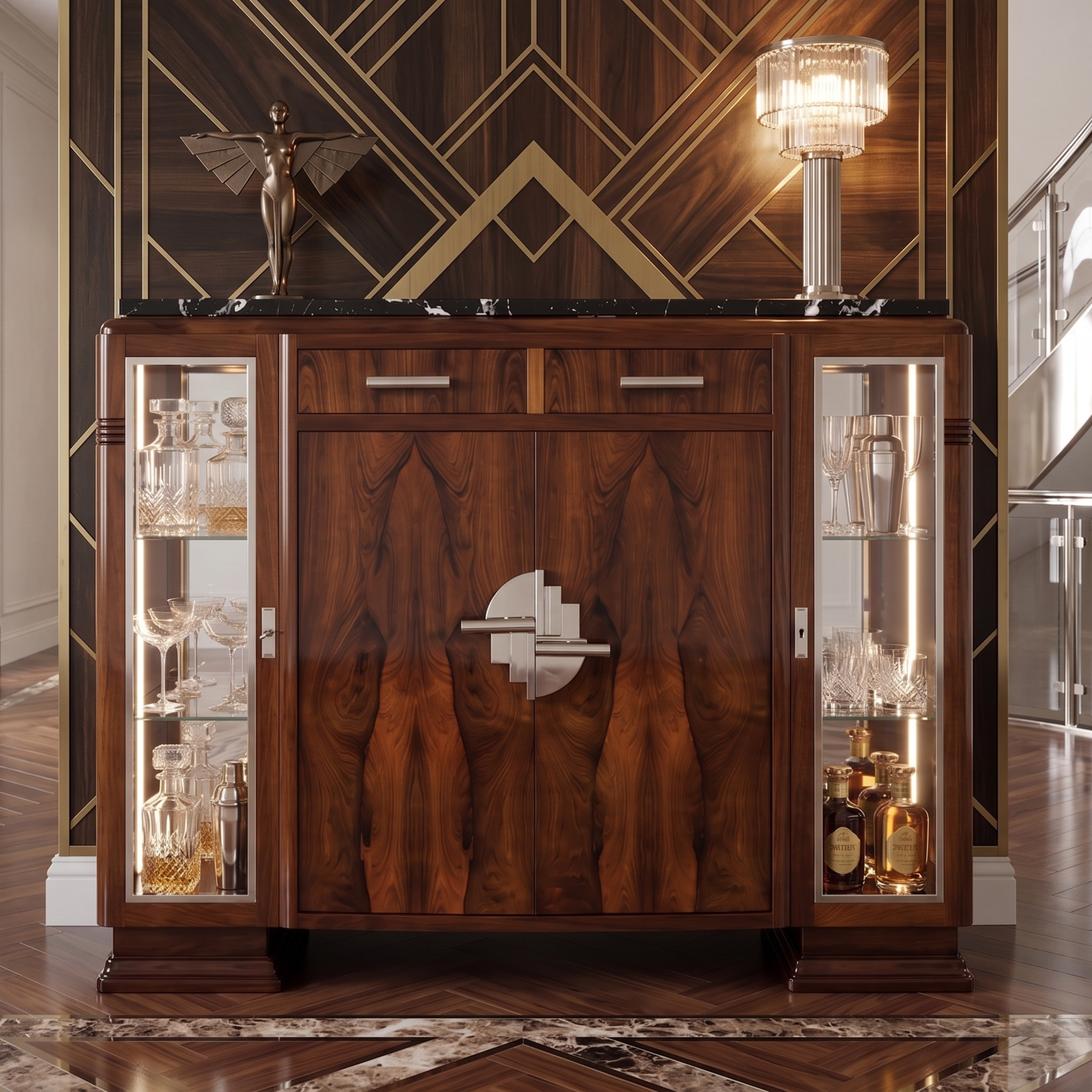
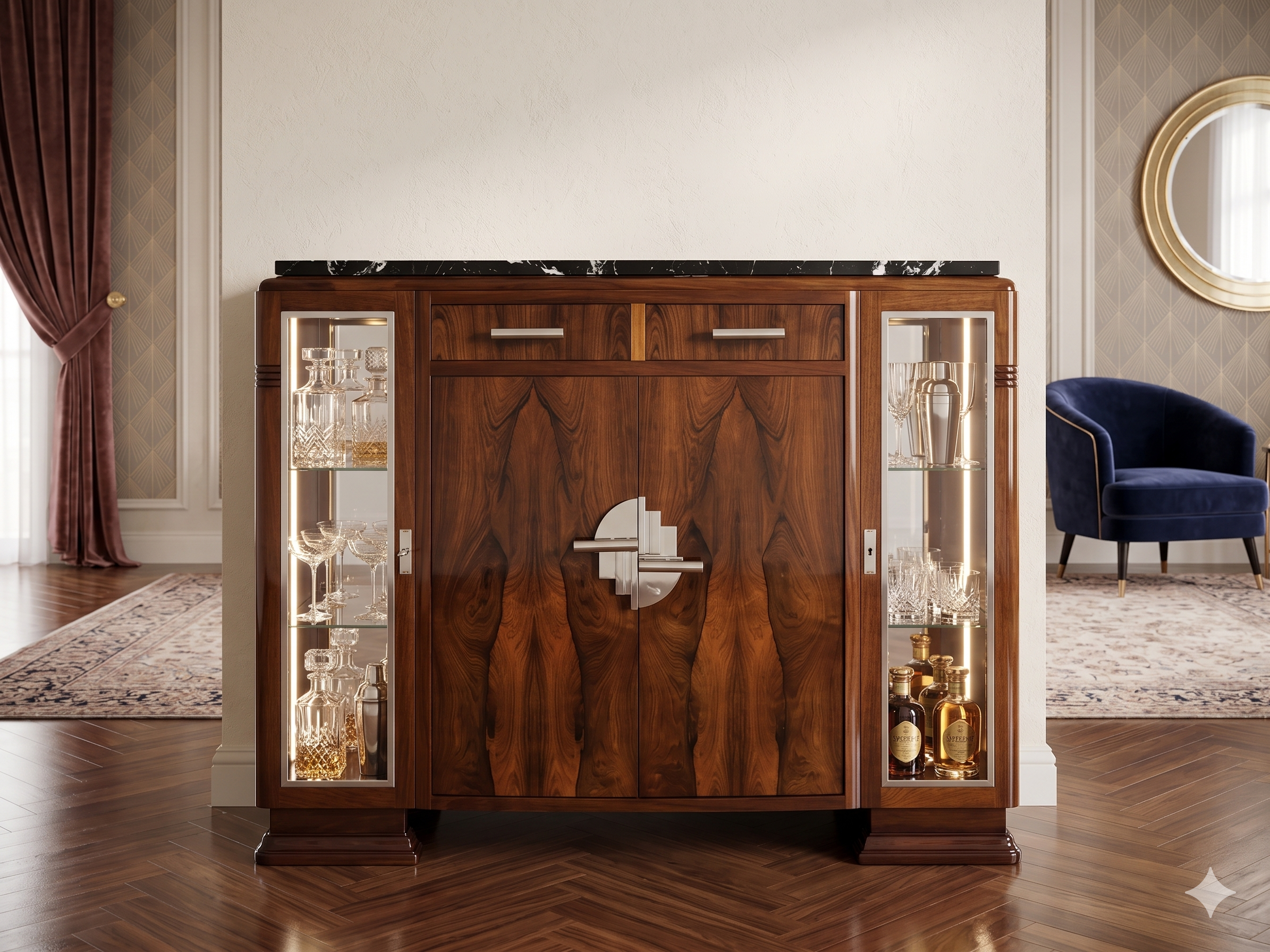
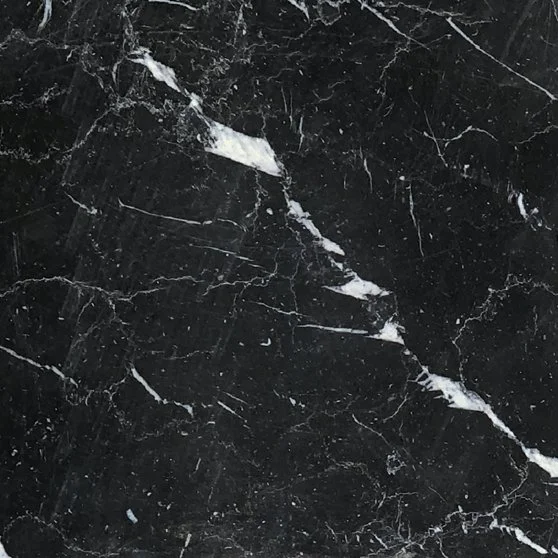
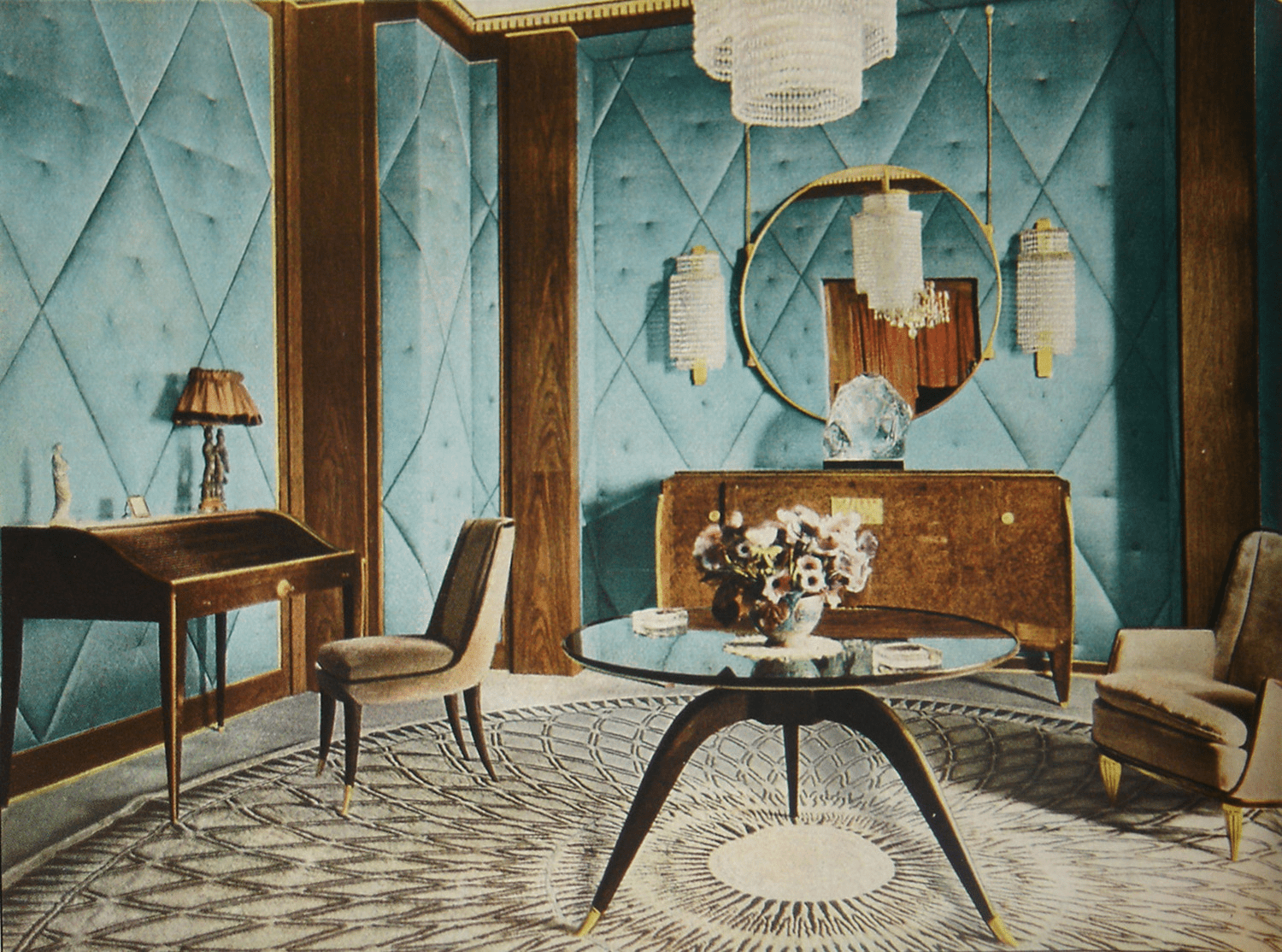
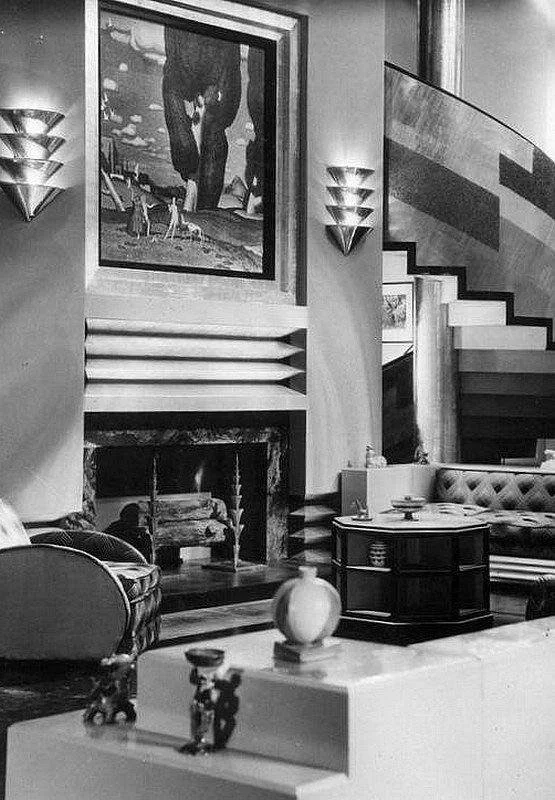
Le Croisé asks a room to organize itself around it. Palissandre veneer with bookmatched flame figure across the central doors, a nero marquina marble top with the natural fissuring of stone quarried before the war, original stepped chrome hardware in the geometric vocabulary of the 1925 Exposition, and flanking glass vitrines designed to hold the porcelain on view — a complete and unrestored example of French Art Deco cabinet-making at the height of the movement, c. 1930. Honest, original throughout. Authenticity assessed and certified.
-
French atelier production, c. 1925
-
French interwar Art Deco Classique
-
Private Home of Saint-Maur-des-Fossés, France. Acquired 2026.
Authenticity professionally assessed.
-
Presque Studio, Chicago, USA

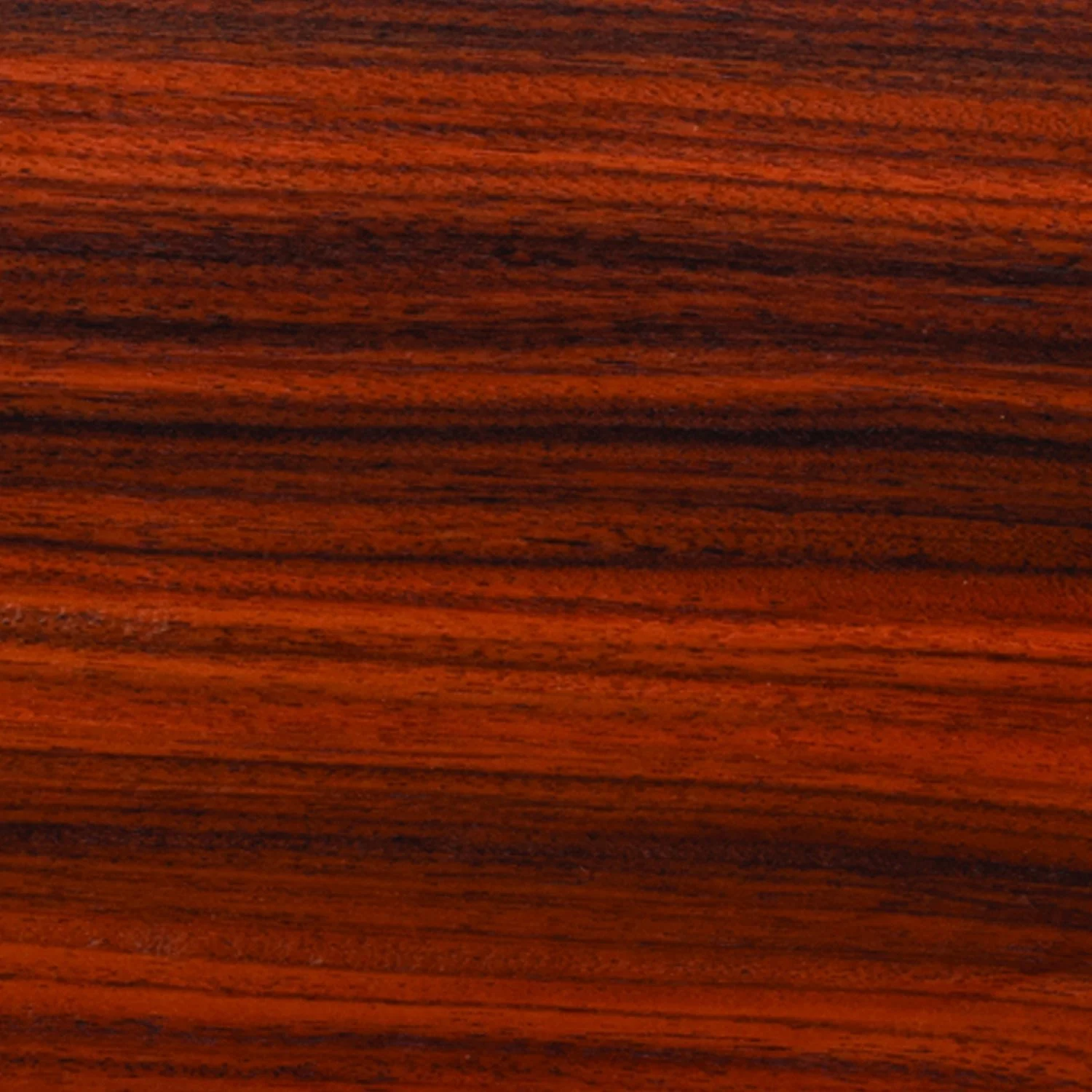
Flame palissandre de Rio
Nero marquina marble
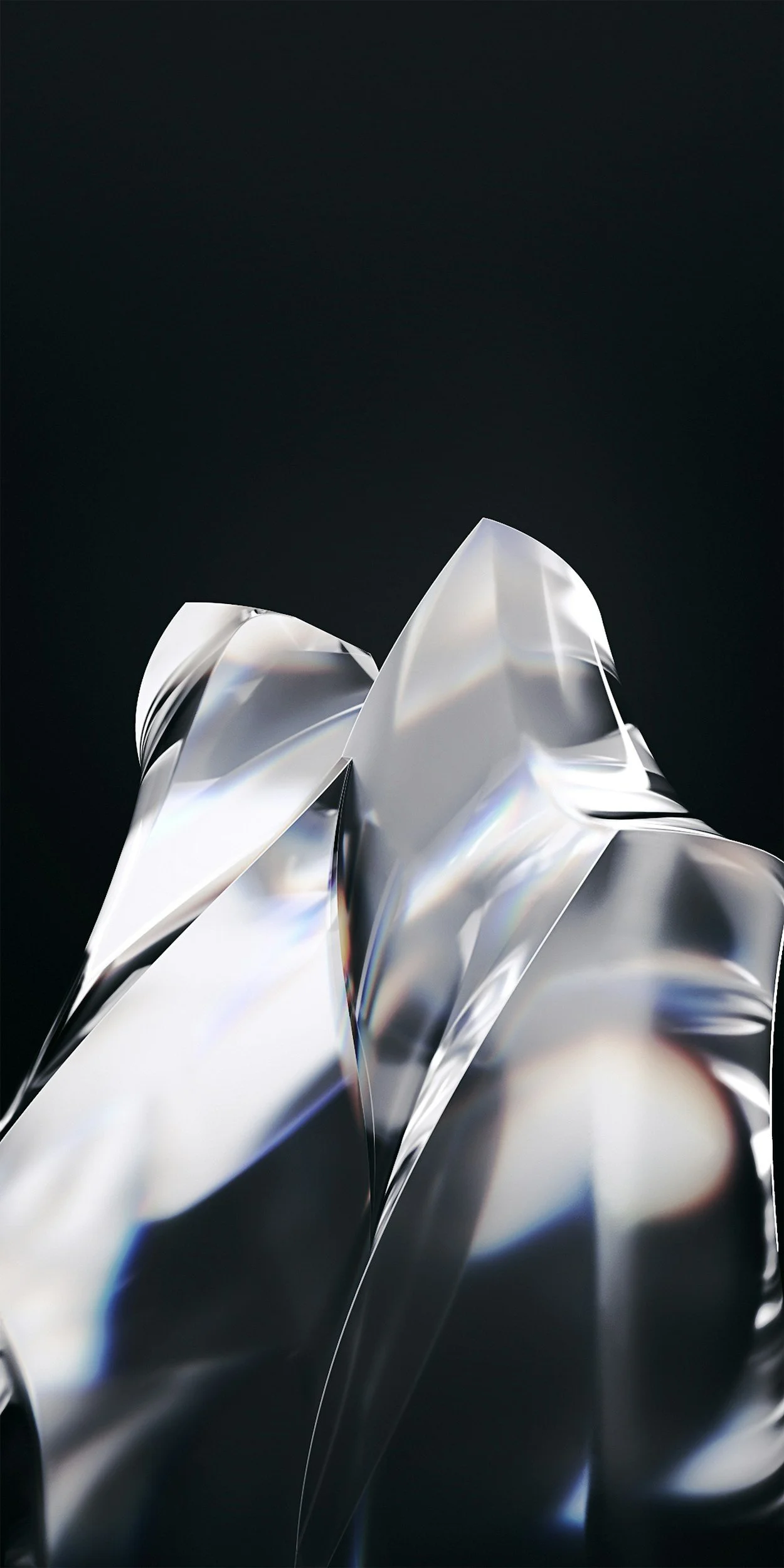
Beveled Glass

Chrome
This furniture goes well with…The book.
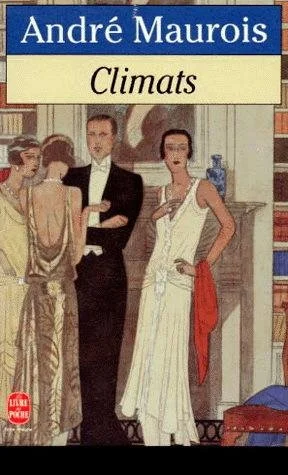
A book.
Climats - André Maurois (1928)
-
Climats is André Maurois's 1928 novel of marriage and aesthetic sensibility set in upper-bourgeois Paris between the wars — the world of Faubourg Saint-Germain apartments, country houses in Limousin, August in Deauville, evenings at the theatre. Maurois writes about a generation that took beauty seriously without naming it, that judged each other on taste and silence as much as on accomplishment. The novel was a literary phenomenon when it was published and remains in print in France a century later. To read it is to enter the social and emotional weather of 1928 — the year Le Croisé was made, the world it furnished.
The record.
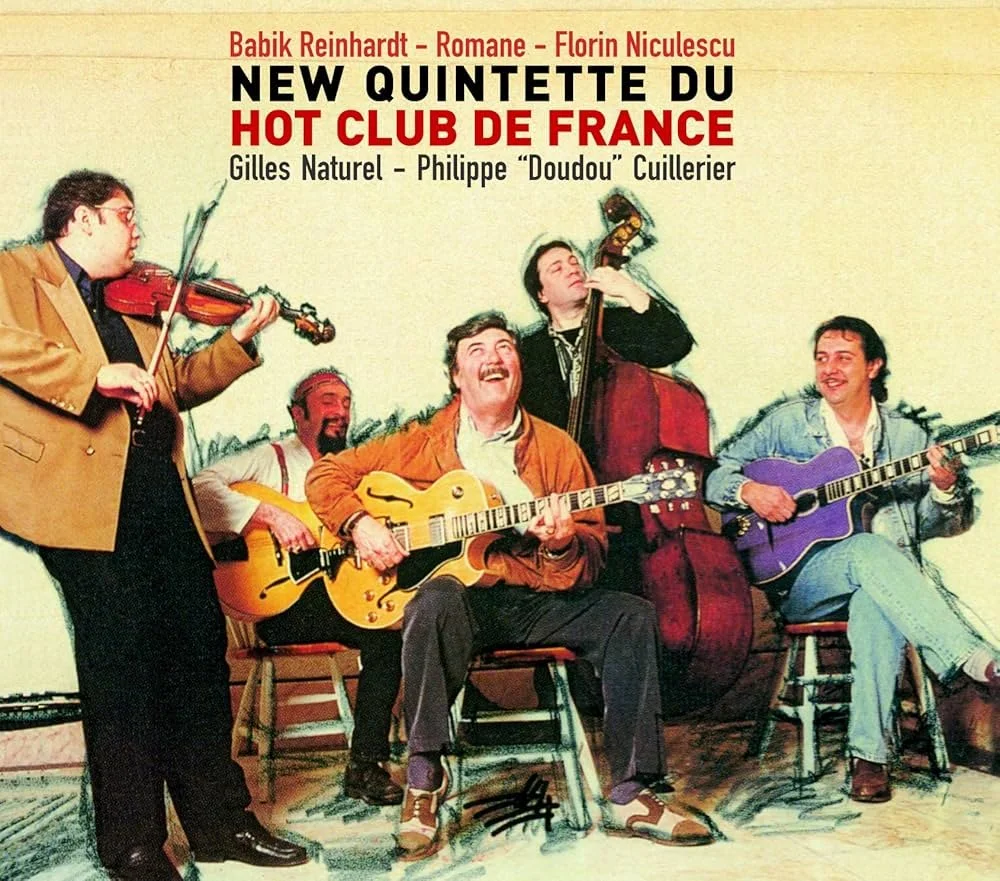
The Quintette du Hot Club de France -Django Reinhardt and Stéphane Grappelli
-
The Quintette du Hot Club de France — Django Reinhardt's gypsy guitar and Stéphane Grappelli's violin, formed in Paris in 1934 — was the first European jazz group to influence American jazz rather than the other way around. Their recordings defined the soundtrack of Parisian apéritif culture in the late 1930s, played on radio and phonographs from Saint-Germain to the 16th arrondissement. Best heard at low volume, in the early evening, before dinner.
The pour.
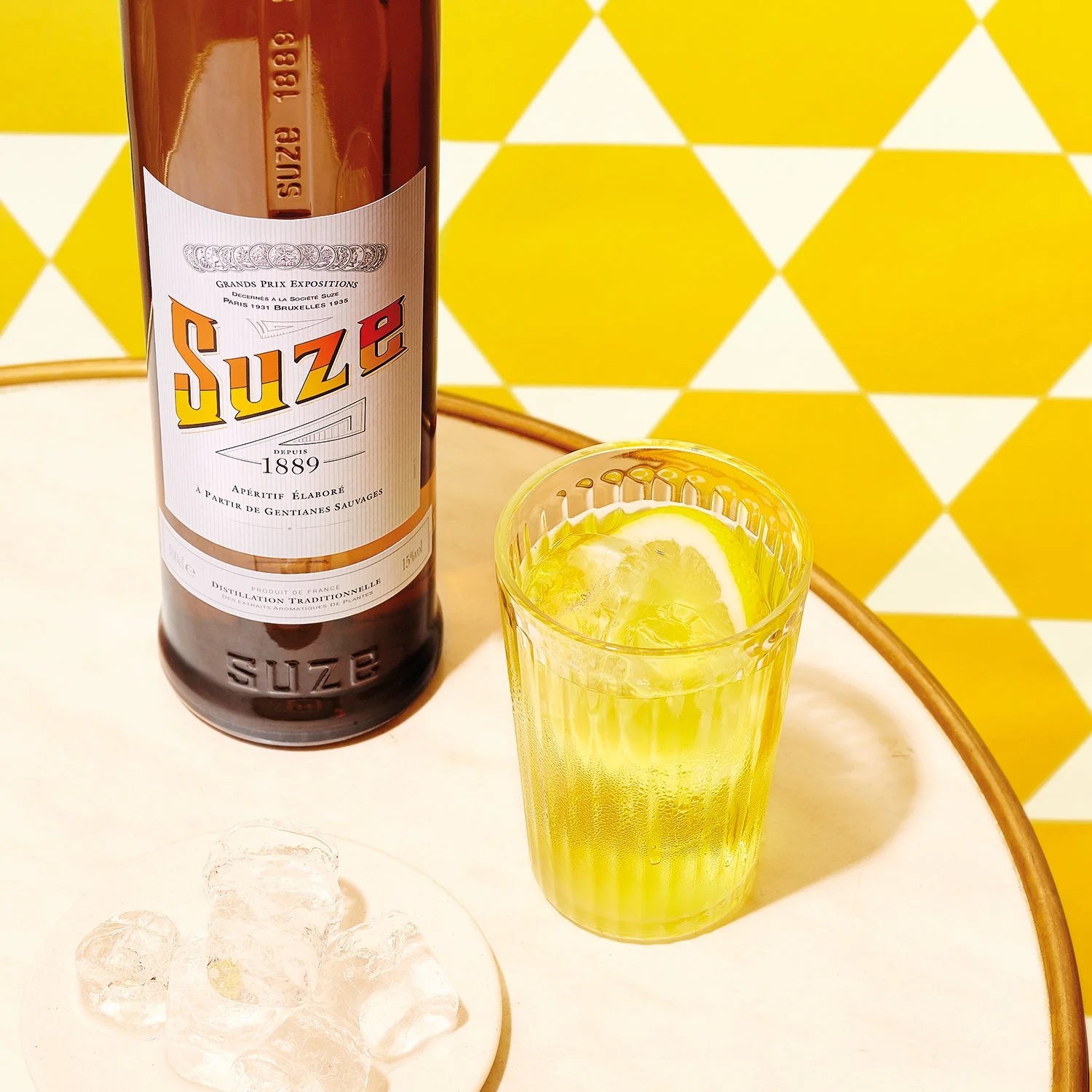
Suze Tonic - unknown creator
-
Suze is a French gentian aperitif made in the Jura since 1889 — bittersweet, yellow-green, low in alcohol, deeply rooted in the Parisian café before-dinner ritual. It was the everyday apéritif of the bourgeois household between the wars, mixed simply with tonic and a slice of lemon, served in the salon while guests arrived. Picasso painted the bottle in 1912 — a papier collé using cut newspaper and pieces of the actual Suze label, now at the Mildred Lane Kemper Art Museum at Washington University in St. Louis. The drink and its bottle were already part of Parisian visual culture by the time Le Croisé was made.
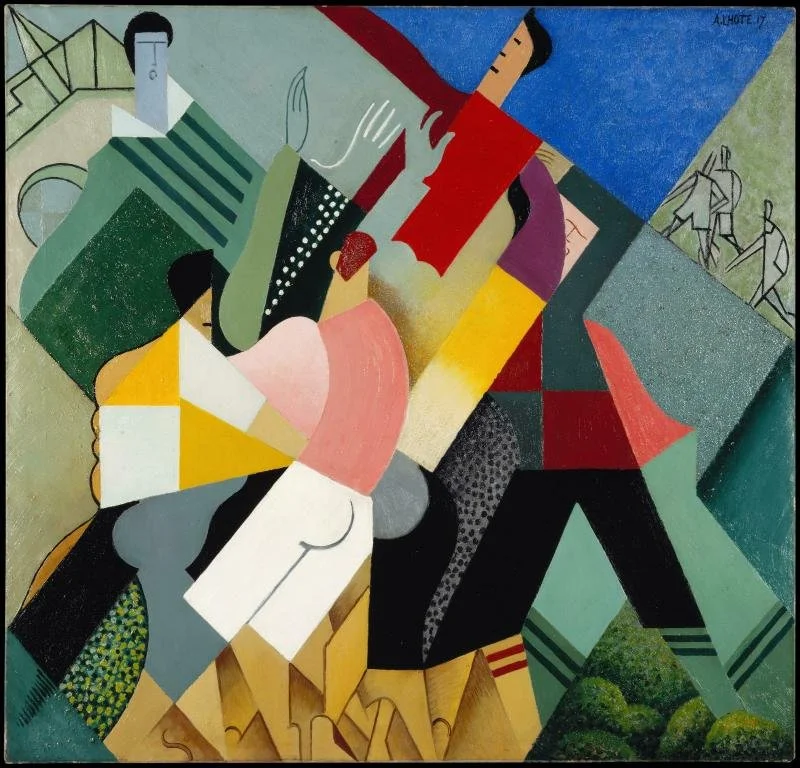
The art.
Rugby - André Lhote (1929)
-
A view of the city walls and the Rhône, painted by a Cubist who never broke from French landscape tradition. Lhote ran his own atelier in Montparnasse from 1922 — Tamara de Lempicka studied there, so did Henri Cartier-Bresson — and he wrote on art for La Nouvelle Revue Française for over twenty years. Avignon hangs at the Centre Pompidou. The painting belongs to the same year Le Croisé was made, and to the same instinct: the modern French eye applied to a continuous tradition.