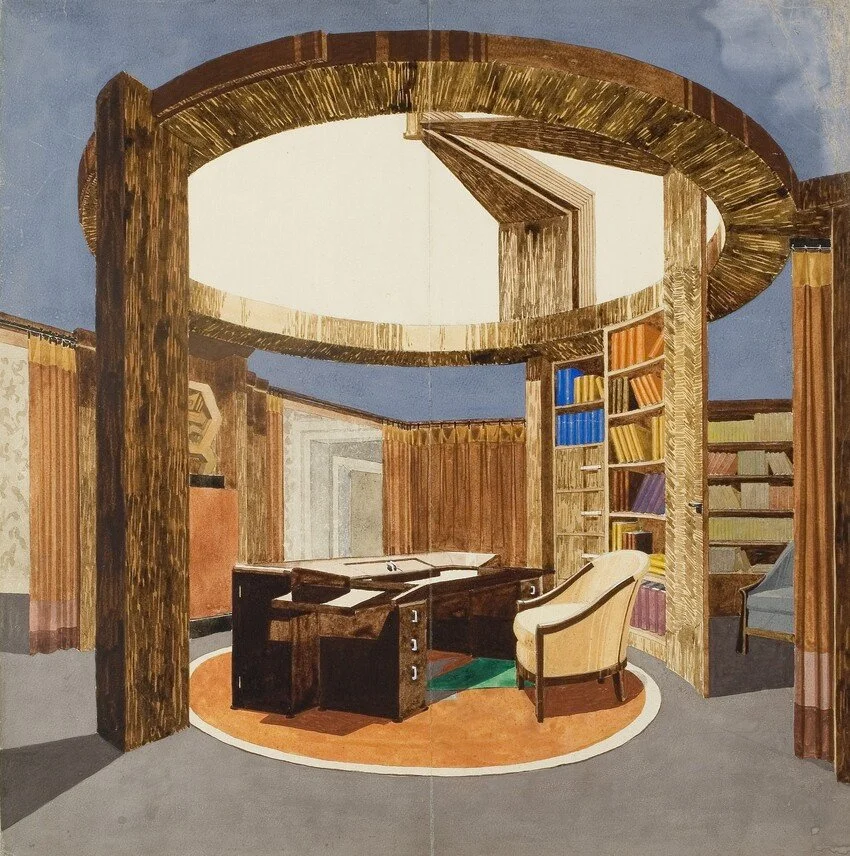
Office-library of the French Embassy designed by Pierre Chareau, 1925 Authenticity & provenance
We handle Authentication Ourselves
We will explain the why and the how below
Formal vintage furniture appraisal standards exist in both the United States and France. In the US, professional appraisers can obtain credentials through recognized bodies and follow established practice guidelines. In France, the commissaire-priseur is a well-established regulated profession with deep roots in the art and auction market.
The infrastructure is there, but…
The issue is not the absence of standards. It's how unevenly they are applied in practice, and the structural tensions that persist even within legitimate appraisal.
We decided early on to take a different approach. Our ‘slow sourcing’ strategy made that decision feel natural. We procure exclusively and directly from families who have owned their furniture for generations. That relationship gives us something no appraiser can provide: the story of the piece, told by the people who lived with it. Starting from that foundation of direct provenance, we built our own authentication process from the ground up — one designed to be consistent, transparent, and free from structural conflicts of interest.
+
Our Authentication Methodology
We evaluate every piece against the following criteria before it is listed. The same rigorous standard is applied to every item, every time, before a piece is selected to join our collection.
One of the most reliable indicators of age and authenticity is how a piece was built. Hand-cut dovetails, irregular mortise and tenon work, and hand-planed surfaces all point to pre-industrial craftsmanship in ways that are difficult to convincingly replicate. We examine drawer construction, cabinet backs, and frame joinery closely.
1. Construction & Joinery AnalysisDifferent wood species were used in distinct ways across regions and time periods, and each carries characteristics that affect both authenticity and value. We also assess aging consistency: genuine patina develops unevenly and organically over decades, in ways that tend to tell their own quiet story.
2. Wood Identification & Aging PatternsOriginal hardware is one of the hardest things to convincingly replicate. Screws, hinges, pulls, and escutcheons all evolved in recognizable ways across different periods, and we pay close attention to whether they show the kind of consistent, natural wear you would expect from a piece of genuine age.
3. Hardware ExaminationWe examine finishes closely to assess originality. A small, inconspicuous scratch test helps reveal finish layers — original shellac, lacquer, and wax behave very differently from modern coatings. This also helps identify whether a piece has been refinished, which affects both authenticity and value, and is something we disclose openly.
4. Surface & Finish Testing (Including Scratch Testing)Every furniture period has a visual vocabulary — the proportions, decorative motifs, leg profiles, and hardware styles that define it. We cross-reference each piece against documented period examples to confirm that the stylistic details are internally consistent.
5. Accent & Stylistic Period MarkersWe research comparable pieces from auction records, dealer listings, and reference collections to verify that a piece is consistent with known examples and appropriately valued. Because we are not paid more when the number is higher, we have no incentive to inflate — and every incentive to get it right.
6. Comparative Market AnalysisCertificate of Provenance
Honesty & Transparency
Tech-Enablement
Excellence in Rigor
Full explainability
Each piece comes with Presque’s Certificate of Provenance. We want to be straightforward about what it is: not a guarantee backed by a licensed institution, but a documented record of our rigorous multi-modal methodology, our findings, and our honest assessment. It includes photographs of the piece, the key authentication signals we identified, any provenance information available, and a unique reference number tied to the item's record.
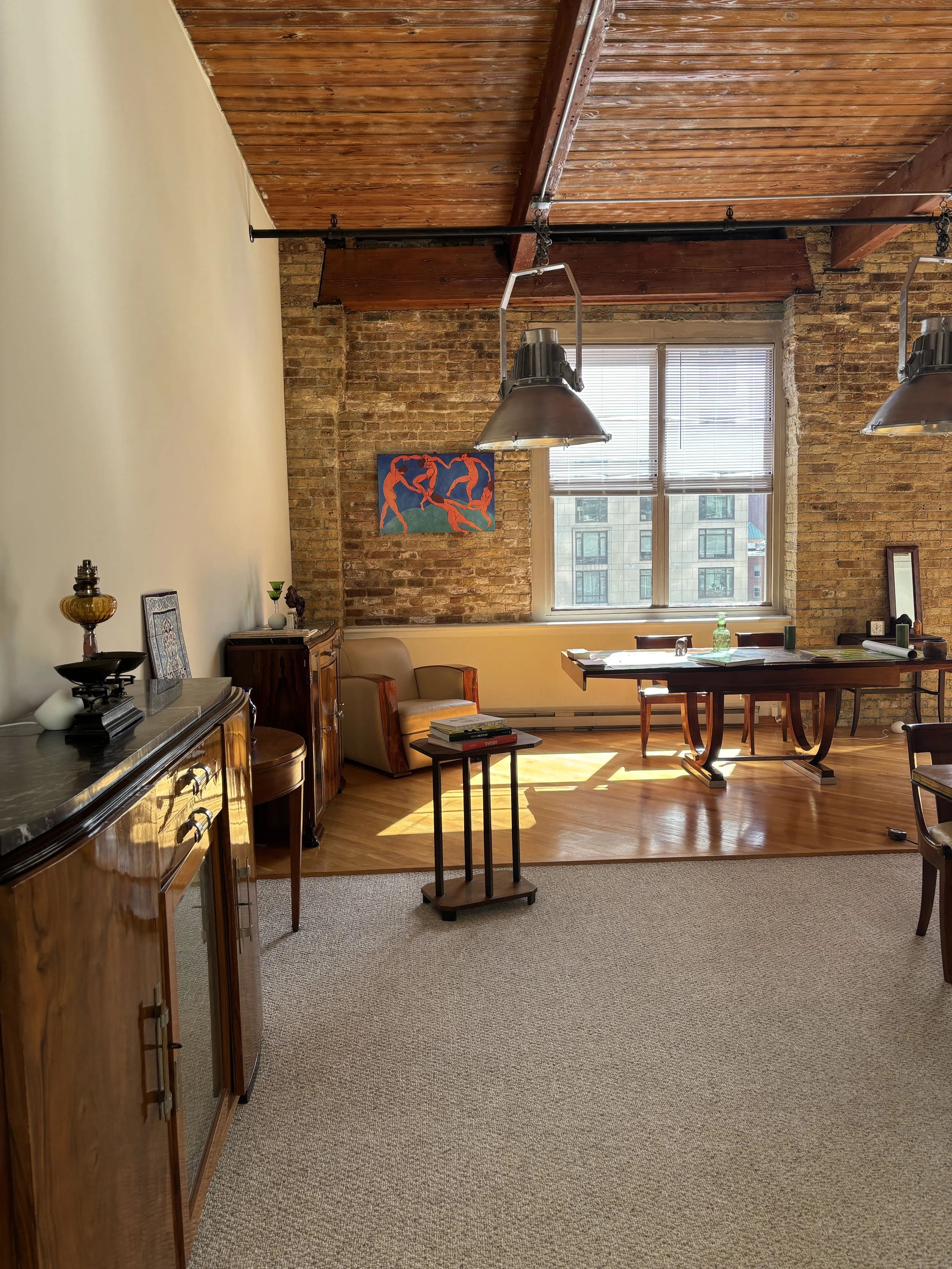
Visit our Studio >
540 N. Lake Shore Drive, Chicago IL