Presque invites you to a rare, exclusively interwar Art Deco collection sourced from private homes across Paris.
How it all began - Eric
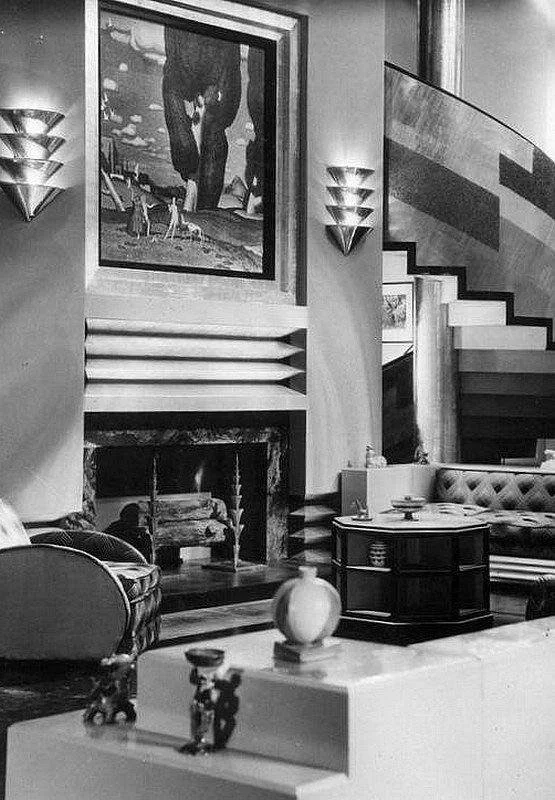
Between roughly 1920 and 1940, something happened in design that hasn't happened since. Geometry, craft, and material intelligence converged into objects as ambitious as the buildings around them. Furniture stopped imitating earlier centuries and began arguing for its own. Then the war came, and broke it. What came after was made for mass production and ultracapitalism — most of what surrounds us now descends from that turn. The pieces that survived remind us we were capable of more.
I grew up in Chicago, surrounded by Art Deco before I knew the name for it. The Carbide & Carbon Building, the Board of Trade, the lobby of the Palmolive — a skyline shaped by American architects who had crossed the Atlantic to study in Paris and come back changed. The 1925 Exposition Internationale des Arts Décoratifs gave the style its name and gave Chicago its century. I rode past those facades for years without seeing them.
Quickly after college, expat life took me to Shanghai, to the Former French Concession — tree-lined longtangs, crumbling facades, a neighborhood that felt like a city dreaming of another century. The Bund taught me the style was never French alone. Then Singapore, and the curved white walls of Tiong Bahru, the same decade speaking in a quieter voice.
Then Paris, where I lived for years. Paris taught me something the other cities couldn't. It is a city that has decided, over centuries, that beauty in public is worth the cost — that a façade, a balcony, a doorway should carry the same care as the rooms behind them. Heritage is not preserved here; it is lived in. Walking those streets reshaped what I thought a designed object was for. One weekend, early on, at the Marché d'Aligre, I bought a table de chevet — small, unassuming, a little worn. That purchase was a door.
There's a feeling I get in front of an Art Deco object that I can't fully name. Something like falling inward. Searching for a meaning I can sense but can't reach. Architecture you can only look at. Painting you can only stand before. Furniture, you live with. You sit in it. You open its drawers. The patina on the brass handle is from a hundred years of someone's hand. It's the closest anyone now alive can get to that decade. That's where I stayed.
Presque exists to bring those pieces here. Only Art Deco, only 1920 to 1940, only from France — because France is where it began. The 1925 Exposition was not a style being exported; it was a style being unveiled. Shanghai, Singapore, Chicago all learned the language Paris had just invented. The pieces I source come from the rooms where it was first spoken. Each season, a small number of them, brought home to Chicago.
Eric