No. 003
Le Trocadéro
Rosewood Dinner Table. c. 1933
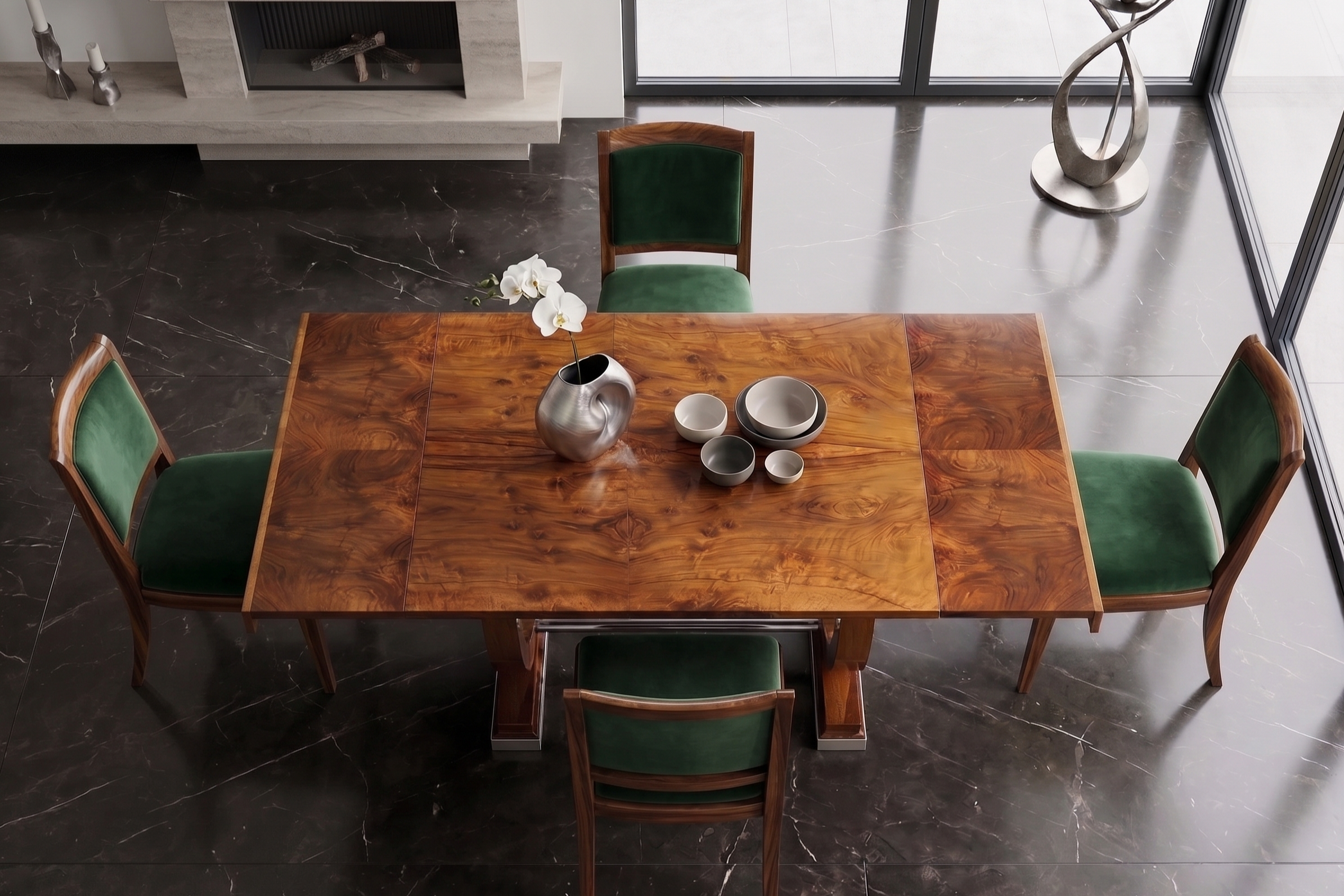
Le Trocadéro was made for the dinners that ran late. Walnut burl veneer with four-way bookmatched grain across the top, a piètement en lyre of curved arched supports flanking a chrome stretcher, set on stepped rectangular plinths in the geometric vocabulary of the 1925 Exposition — a Parisian table à allonges of the high Art Deco period, c. 1933, made for an apartment that expected to seat eight on a Saturday night. Top refinished, base original. Authenticity assessed.
One for One | Status: Available in Chicago
-
French atelier production, c. 1933
-
Le Trocadéro is Art Déco Classiqueat its most architecturally resolved. The piètement en lyre, curved supports flanking a chrome stretcher on stepped geometric plinths, is the period's defining tension made structural: organic form above, machine material below. French ateliers of the 1930 generation were the only ones doing this, holding craft and industry in the same object without letting either win. The Bauhaus chose industry. The French chose both.
-
Private Home of Saint-Maur-des-Fossés, France. Acquired 2026.
Authenticity professionally assessed.
-
Presque Studio, Chicago, USA
-
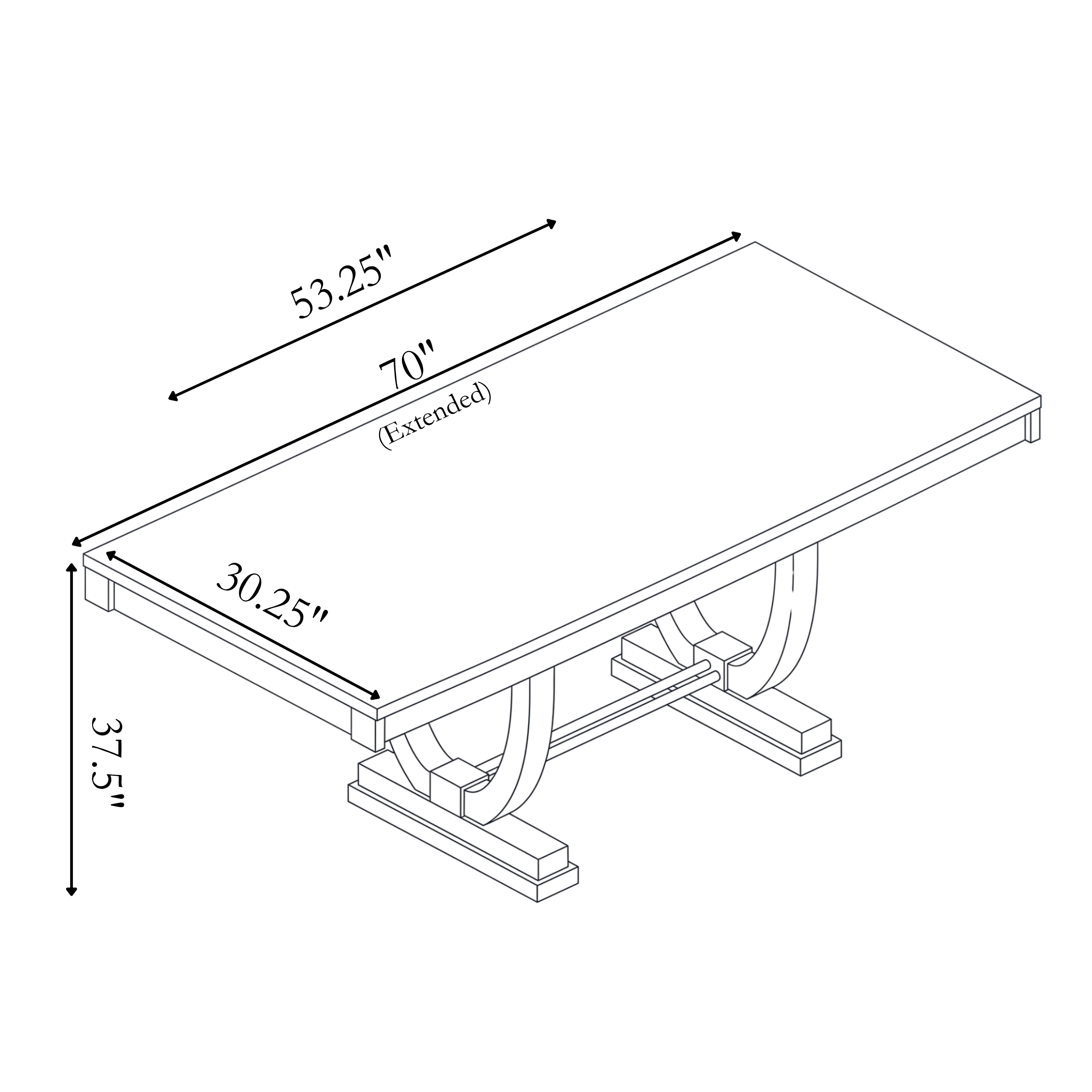
70 x 30.25 x 37.5 (inch)
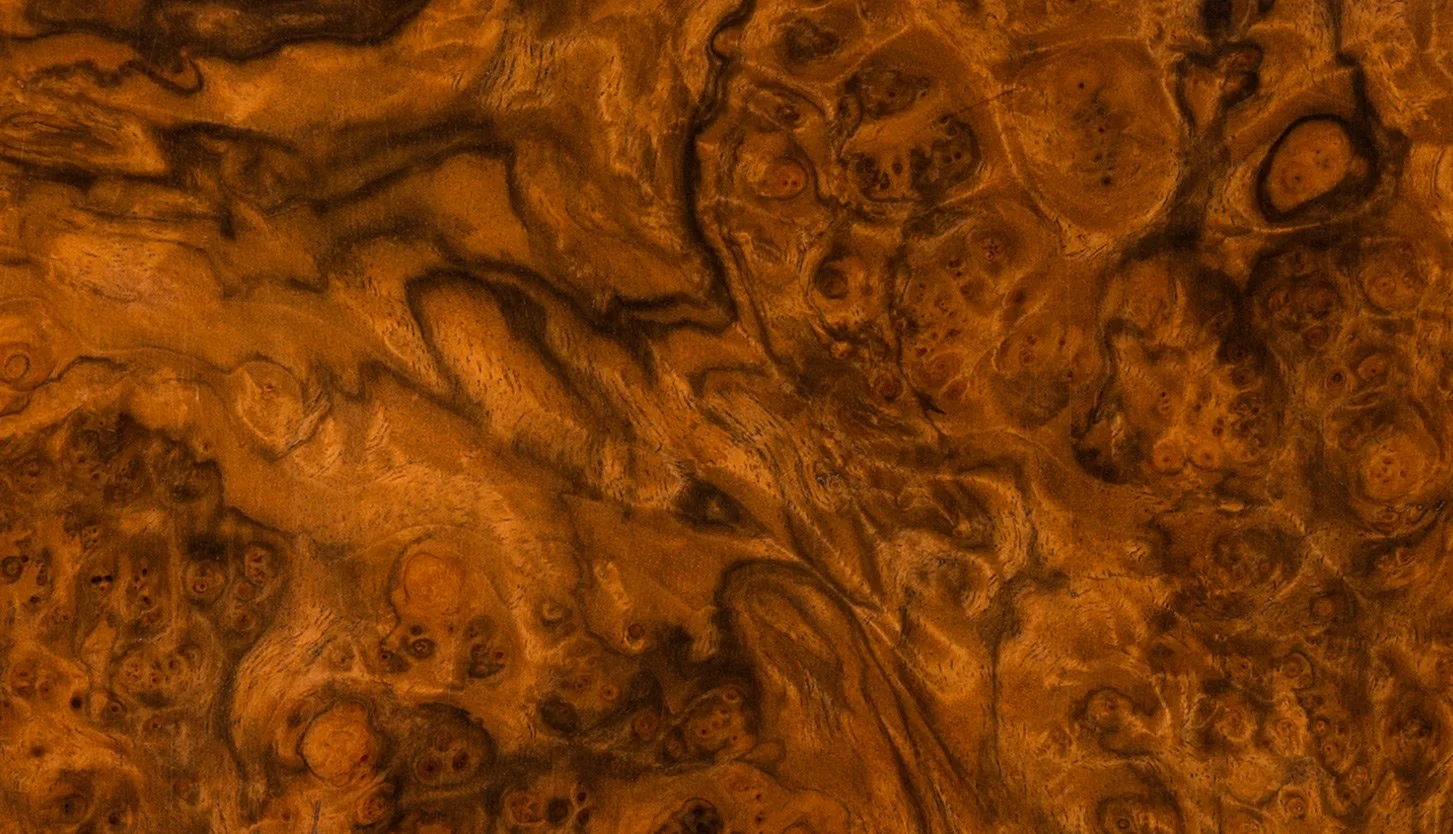
Walnut Burl Veneer four-way bookmatched
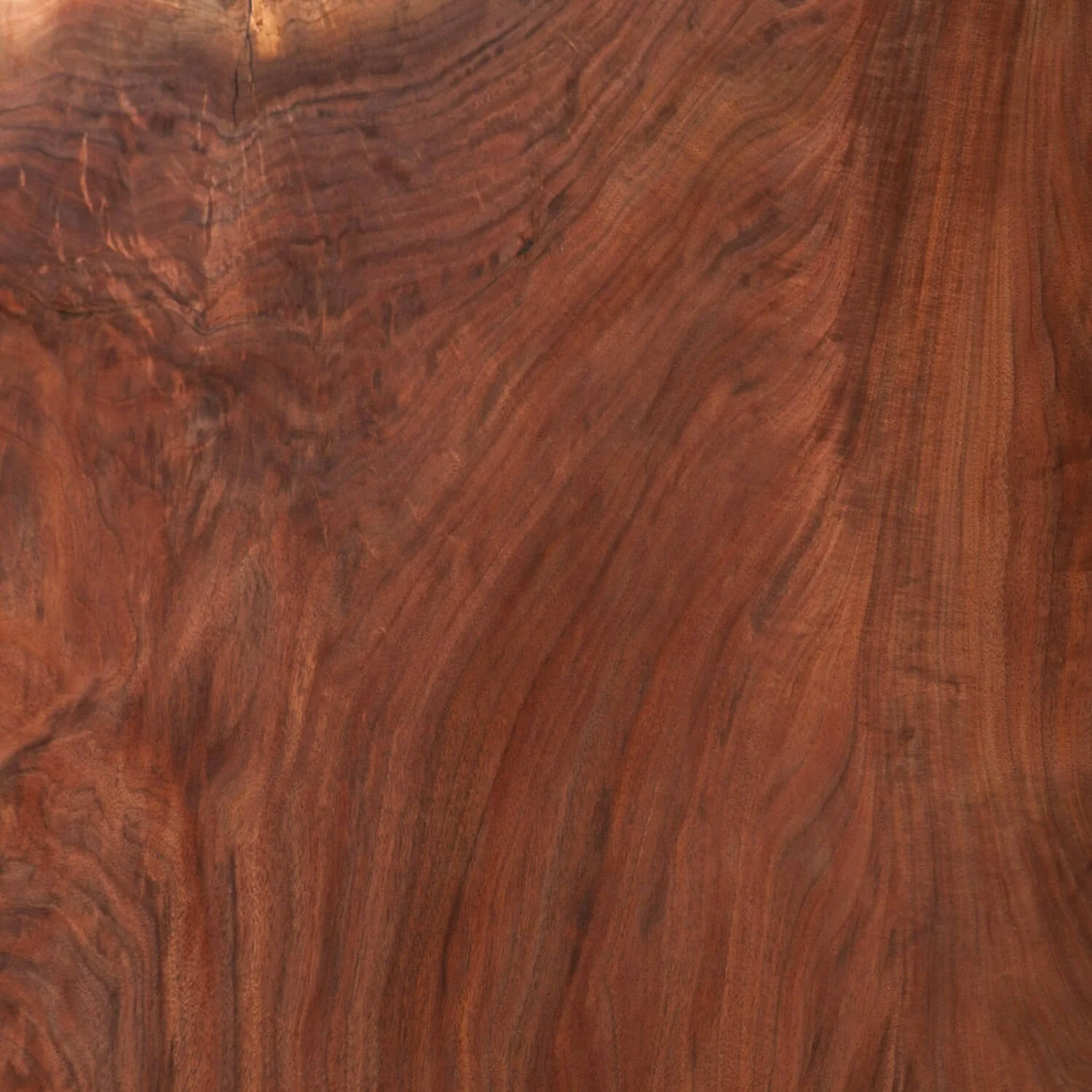
Solid Walnut Base

Chrome Stretcher
Studio imagery rendered from photographs of the original piece.
Presque does not sell online. Each piece is acquired in person
This furniture goes well with…The book.
Les Thibault - Roger Martin du Gard (1922-1940)
-
Les Thibault is a roman-fleuve — a "river novel," a multi-volume sequence that follows a single family across decades — written by Roger Martin du Gard between 1922 and 1940. It runs to eight volumes (some editions count it as seven; numbering varies because of how the volumes were grouped) and follows two brothers, Antoine and Jacques Thibault, from their adolescence in a strict Catholic Parisian bourgeois household around 1905 through World War I. Les Thibault is a deliberately serious choice. Roger Martin du Gard won the Nobel Prize in 1937 — the kind of multi-volume work that lined the shelves of every educated Parisian family.
The record.
Trois Gymnopédies & Six Gnossiennes - Eric Satie (1956)
-
Satie’s music is famously the music not to listen to, but designed to occupy the room without demanding attention. Satie called this concept musique d'ameublement or furniture music. Played by Aldo Ciccolini, composed in the 1880s but recorded in Paris in 1956 — the recording the post-war Parisian bourgeoisie listened during intimate dinners. Slow enough to disappear behind conversation, and returns when the conversation pauses.
The pour.
Châteauneuf-du-Pape - Southern Rhône
-
A bottle of Châteauneuf-du-Pape from the southern Rhône, opened an hour before the guests arrive. Decanted at the table once the second course is served. Lasts the meal. Cocktails are for before dinner; wine is for during. Châteauneuf is especially fitting because it's the bourgeois Parisian Saturday-night red: generous, southern, ages well in the bottle, opens across an evening. Fun fact: Châteauneuf was elevated to AOC in 1936, exactly contemporaneous with this table, and it became the dining wine of the wealthy Parisian household in the 1930s.
The art.
Les Perruches - Jean Dupas, (1925)
-
The painting Ruhlmann chose to hang in his pavilion at the 1925 Exposition — Art Deco's first portrait of itself. The kind of painting that hung above the sideboard, framing the room without competing with it.
+ Then sought after
Le Croisé >
Le Recamier >
Le Courcelles >
Le Monceau >