No. 011
Le Concorde
Coiffeuse-buffet. c. 1928.
One for One | Status: Available in Chicago
In France, getting ready was always partly a social act. Le Concorde is built on that understanding, a coiffeuse and a buffet in one body, the mirror where it belongs, the storage where it is needed.
Three doors below a single carved drawer, a marble top that holds whatever needs holding, and the arched mirror rising from the back, integrated, not added as an afterthought. The bombé ends give the body its fullness without excess; the bookmatched walnut burl veneer across each door panel turns the surface into a field of warm figure, symmetrical and unhurried, the grain meeting at the center of each panel with the precision that separates a serious atelier from a competent one. The carved drawer pull is the piece's only gesture toward ornament, and it is the right one: floral, restrained, placed at the exact center where the eye naturally lands. To be assessed and certified on arrival.
-
French atelier production, c. 1928
-
Le Concorde belongs to the late phase of French Art Déco, the years after the 1925 Exposition had established the vocabulary and designers began to work within it rather than invent it. The high geometric severity of the early twenties had softened by 1928: forms became rounder, surfaces warmer, ornament more honestly placed. The bombé silhouette is the period's answer to how to give a piece volume without weight. The walnut burl veneer is the choice of a maker who understood that the wood itself was ornament enough. The arched mirror carries the geometric discipline of the period in its chamfered frame without announcing it, characteristic of the serious Parisian ateliers working in the final years before the war interrupted production entirely.
-
Private Home of Parisian suburb of Seine-et-Marne, France. Acquired 15 May, 2026.
Authenticity professionally assessed.
-
Presque Studio, Chicago, USA
-
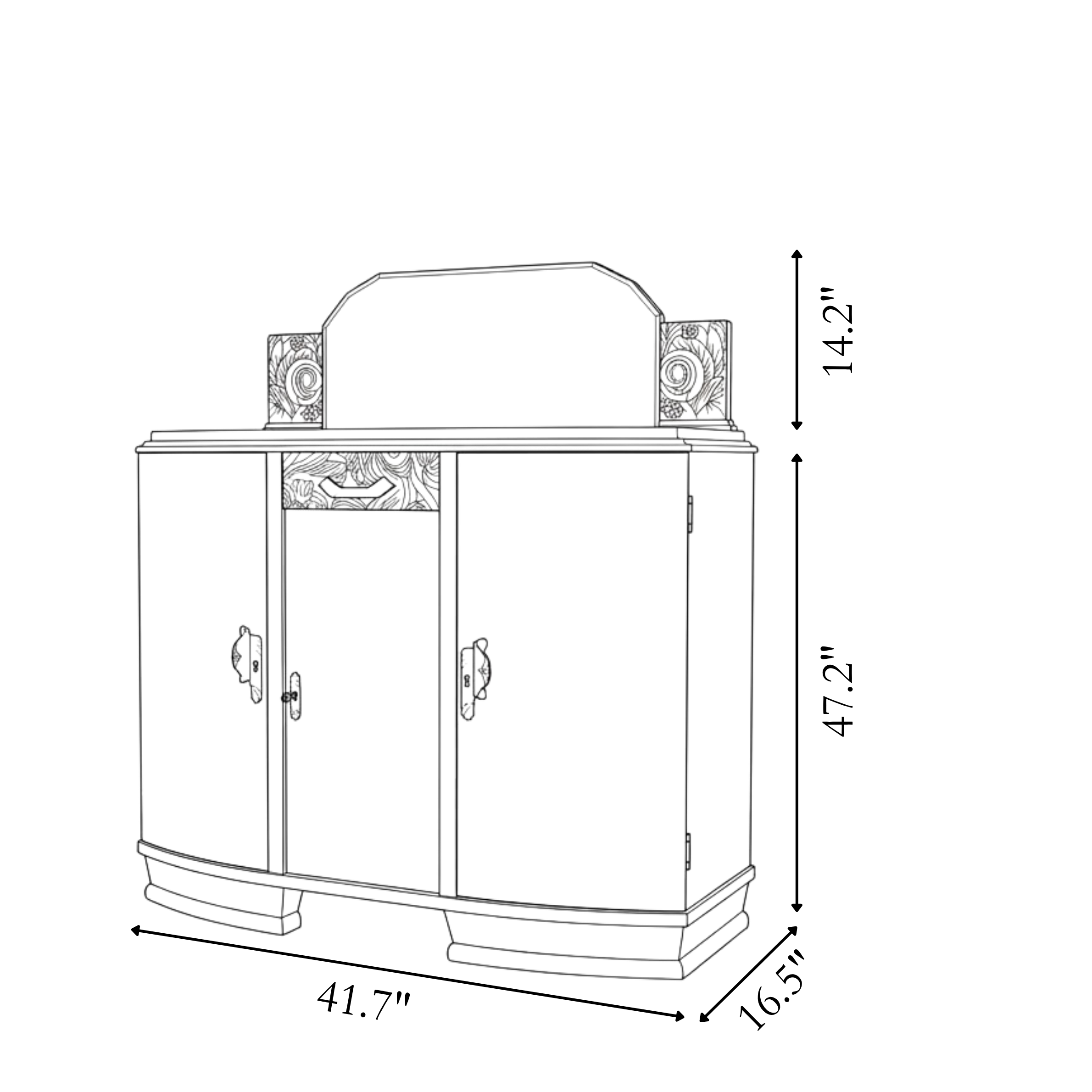
Buffet: 41.7 × 16.5 × 47.2 (in)
Mirror: 14.2 (in)

Figured Walnut Veneer bookmatched
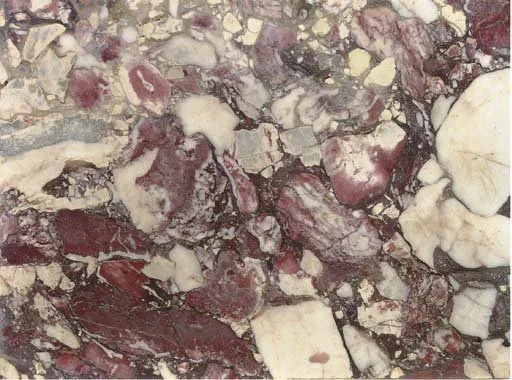
Brèche Violette marble

Arched mirror
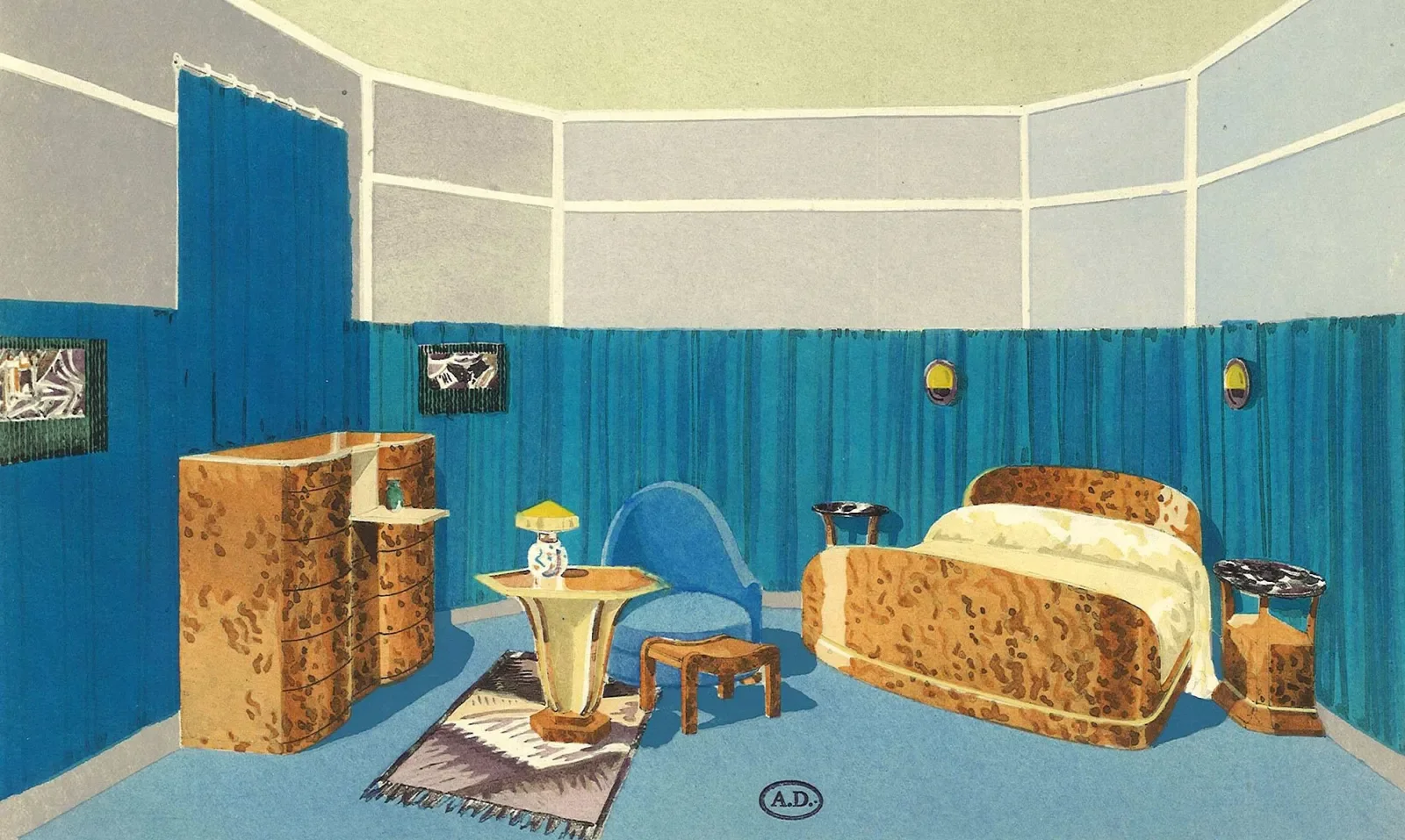
Studio imagery rendered from photographs of the original piece.
Presque does not sell online. Each piece is acquired in person
This furniture goes well with…The book.
Jean Cocteau, Le Livre blanc (1928)
-
Published anonymously, circulated quietly, written in the first person with the candor of someone who has decided that honesty costs less than the alternative. Cocteau was at the center of everything in Paris in 1928, the salons, the ateliers, the late evenings in apartments exactly like the one Le Concorde came from, and Le Livre blanc is the book he wrote when he stepped outside all of it. Short enough to read in a single sitting, precise enough to require a second. The right book for the private hour, when the room is yours and the mirror is no longer performing.
The record.
Lucienne Boyer, Parlez-moi d'amour (1930)
-
Boyer sang as if the listener were the only person in the room, not to an audience but to one person across a small distance, in the register of a confidence rather than a performance. The song won the Grand Prix du Disque in 1931 and sold across France throughout the decade; it was genuinely in the air during the years Le Concorde was made and used. It belongs to the hours on either side of the evening, before the guests arrive, or after they have gone, when the room returns to itself.
The pour.
Carthusian Monks, Chartreuse Verte (1737)
-
Distilled by the Carthusian monks of the Grande Chartreuse since 1737, from a formula of 130 plants that has never been written down outside the monastery. One small glass, served cool, before the evening begins. It is herbal, precise, and slightly austere — the drink of someone who has already decided how the night will go.
The art.
Tsuguharu Foujita, Femme au miroir (1922)
-
Watercolour and gold leaf on paper. A woman holds a mirror; Foujita paints the act of looking rather than what looking produces, the held object, the angle of the wrist, the attention directed inward. He was at the height of his Paris years when he made this work, the celebrated milky-white ground and the ultra-fine menso line that made him the most talked-about painter at the Salon d'Automne. The painting belongs beside Le Concorde because it depicts the same quiet moment: a woman, a mirror, the private hour before the door opens.
+ Then sought after
Le Marais >
Le Trocadero >
Le Dauphine >
Le Monceau >