No. 006
Le Saint-Paul
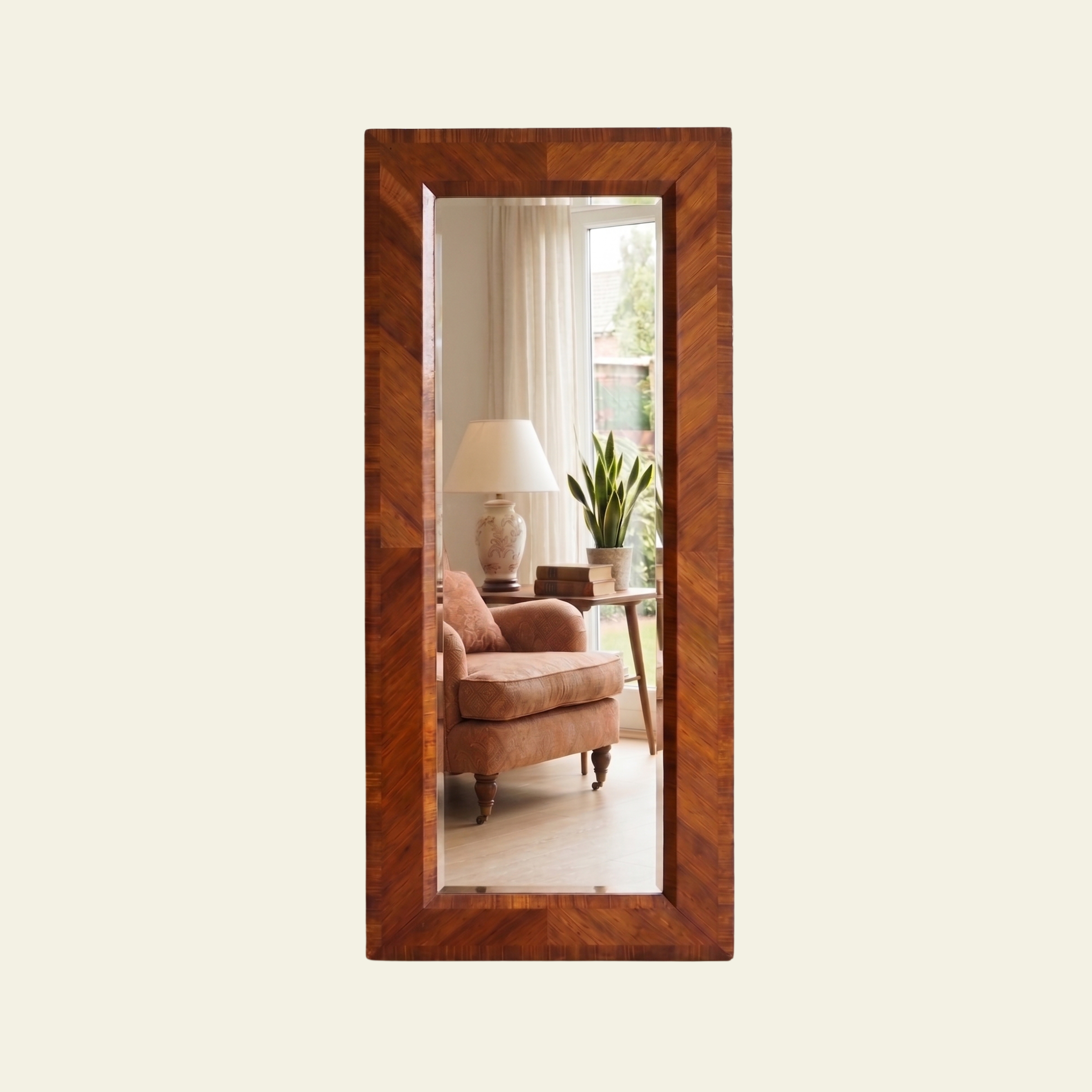
Rosewood Mirror. c. 1930
One for One | Status: Available in Chicago
Le Saint-Paul watched the corridor for a hundred years. The frame is palissandre: dark, violet-tinged rosewood, the prestige material of French Art Déco at its height. Chevron-laid parquetry visible across all four sides, the grain meeting at the corners without interruption. At forty-four inches tall and fourteen wide, it is the piece that transforms a blank wall into an interior: narrow enough to hang where nothing else can, present enough to anchor a room. Original mercury-tin amalgam glass, foxed at the surface, warm in tone - the soft reflection of old glass that no modern mirror replicates. Honest, unrestored, original throughout.
-
French atelier production, c. 1930
-
Art Déco classique, c. 1925–1935. The palissandre rosewood frame places Le Saint-Paul in the high period of French Art Déco — the material famed designers such as Ruhlmann built their reputation on, the prestige veneer that defined the movement's peak decade. The chevron parquetry is consistent with the geometric discipline of the same years: diagonal, precise, ornament derived entirely from construction rather than applied to it. The mercury-tin amalgam glass confirms pre-war manufacture, the process largely replaced by mid-century.
-
Private Home of Paris suburb, Val-de-Marne. Acquired May 6th, 2026.
Authenticity professionally assessed.
-
Presque Studio
300 N. State Street, Chicago, USA
-
13¾ × 4 × 43¼ (inch)
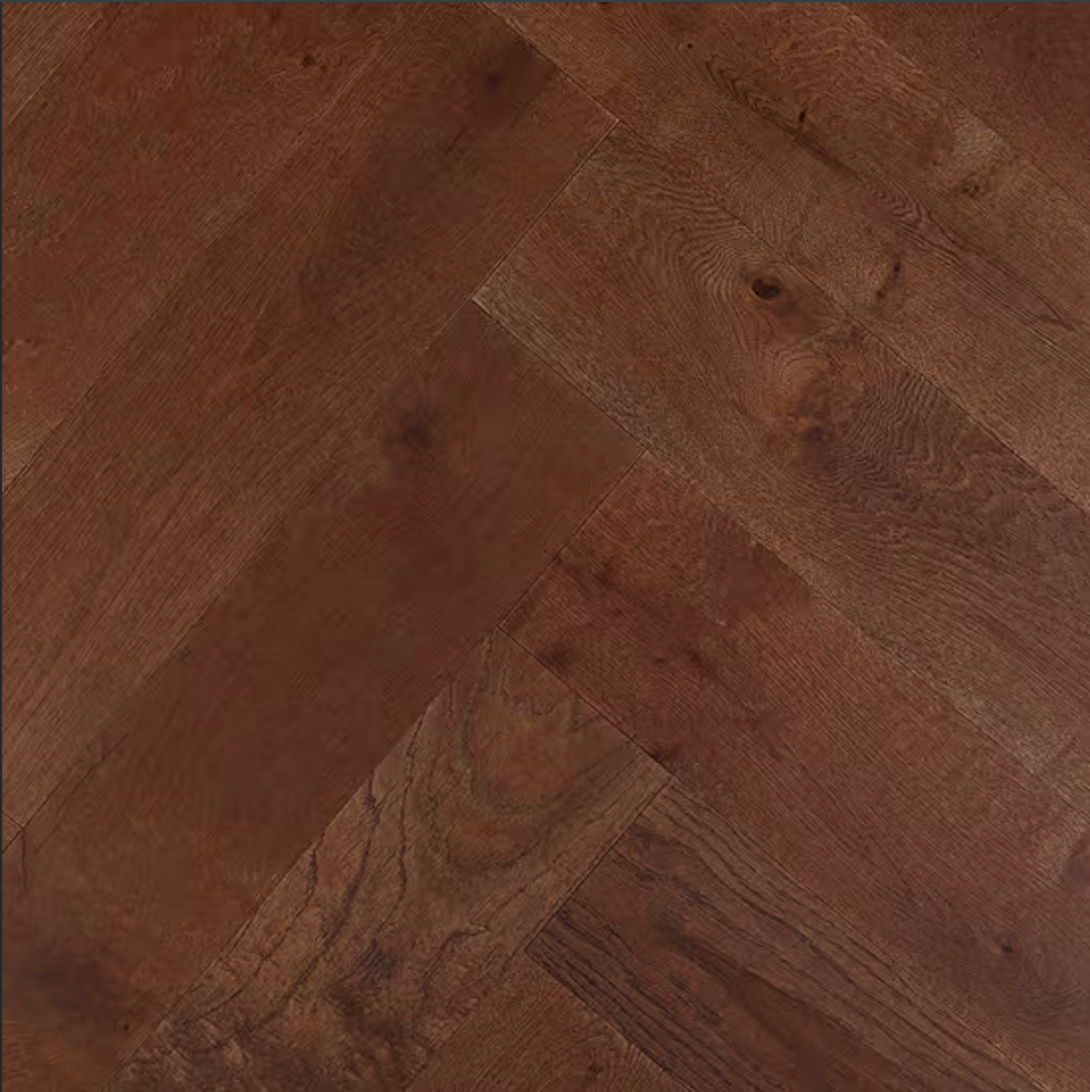
Palissandre Rosewood veneer, chevron-laid parquetry

Mercury-tin amalgam mirror glass
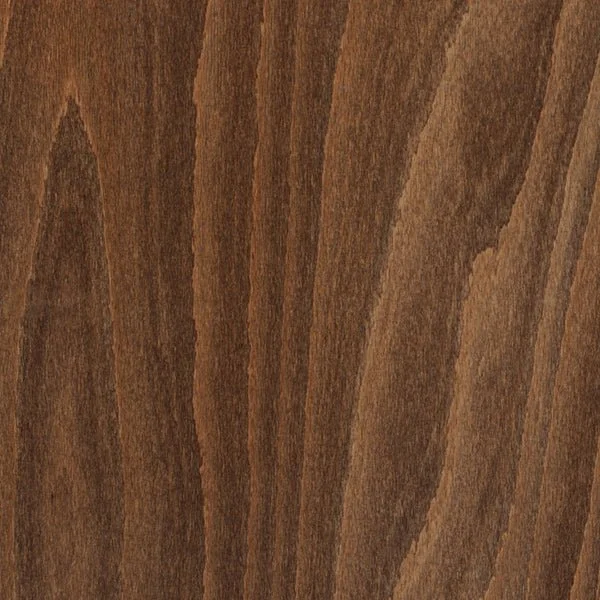
Ebonized Wood Structure
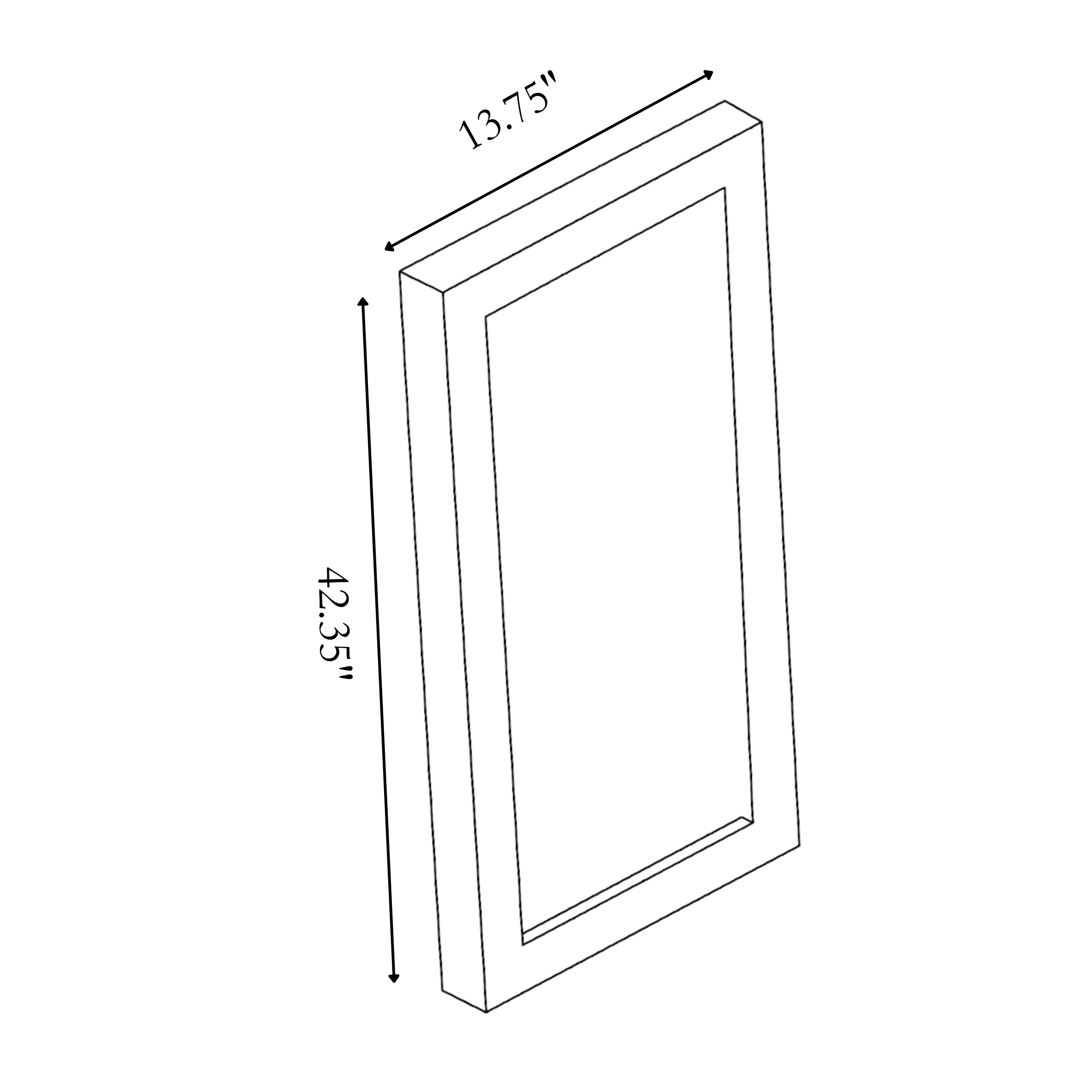
Studio imagery rendered from photographs of the original piece.
Presque does not sell online. Each piece is acquired in person.
A thoughtful pairing...The book.
Nadja André Breton (1928)
-
The story of a man wandering Paris and its passages that keep producing unexpected encounters. He meets a woman named Nadja who appears and disappears across several weeks, leaving him uncertain each time whether the meeting was real or imagined.It is a novel about catching glimpses — of people, of streets, of a life that keeps almost revealing itself. Breton was the theorist of the involuntary image, the found object, the moment when the everyday produces the uncanny. Nadja is the right book for Le Saint-Paul because the mirror is itself a Surrealist object: it holds a world that is present and absent simultaneously, a reversed space that exists only when someone stands in front of it.
The record.
Que reste-t-il de nos amours? Charles Trenet (1937)
-
The chanson of what remains; of loves, of presences, of the people who caught their reflection in this glass before the current owner did. Trenet wrote it during the Occupation, which gives the question its full weight: what remains when the world that produced it has gone? The melody is light, almost dancing; the question underneath it is not. Played in the apartment when the apartment is empty, audible from the next room, not attended to. The right music for a mirror that has been watching a corridor come and go for a hundred years.
The pour.
Sidecar, Ritz Bar, Paris (1920s)
-
Cognac, Cointreau, lemon, served in a coupe with a sugared rim. Invented at the Ritz Bar in Paris in the early 1920s, exactly contemporaneous with Le Saint-Paul, in the same city and the same decade. The drink of the Parisian interwar years at their most assured: neither casual nor ceremonial, simply correct. Poured before going out, finished at the mirror.
The art.
Portrait de Madame Paul Guillaume , Marie Laurencin (1924)
-
Domenica Walter was the wife of the dealer Paul Guillaume, who assembled one of the great collections of early twentieth-century French painting; after his death she gave it to the French state, where it hangs now in the Musée de l'Orangerie alongside the Cézanne and the Monet. Laurencin painted her in soft pinks and grays — a woman in three-quarter view, present in the frame but not quite looking back. She painted the women of exactly the milieu Le Saint-Paul came from — serious Parisian households, good furniture, the entry hall with the mirror and the coat hook and the table for the evening's first drink. The portrait has the quality of a glimpse: a face caught in passing, composed but not posed. Fourteen inches wide, Le Saint-Paul offers the same.
+ Then sought after
Le Recamier >
Le Trocadero >
Le Croisé >
Le Saint-Paul >